

Case study — Wandsworth, South-West London
Wandsworth Victorian Terrace — Two-Storey Rear Extension
This case study covers a two-storey rear extension to a Victorian terraced house in Wandsworth, adding a ground-floor open-plan kitchen-dining room and a first-floor bedroom with en-suite. The project required a householder planning application to London Borough of Wandsworth and involved party wall considerations with both adjoining owners.
Example planning & architectural drawings
Example plan sheets prepared by Crown Architecture
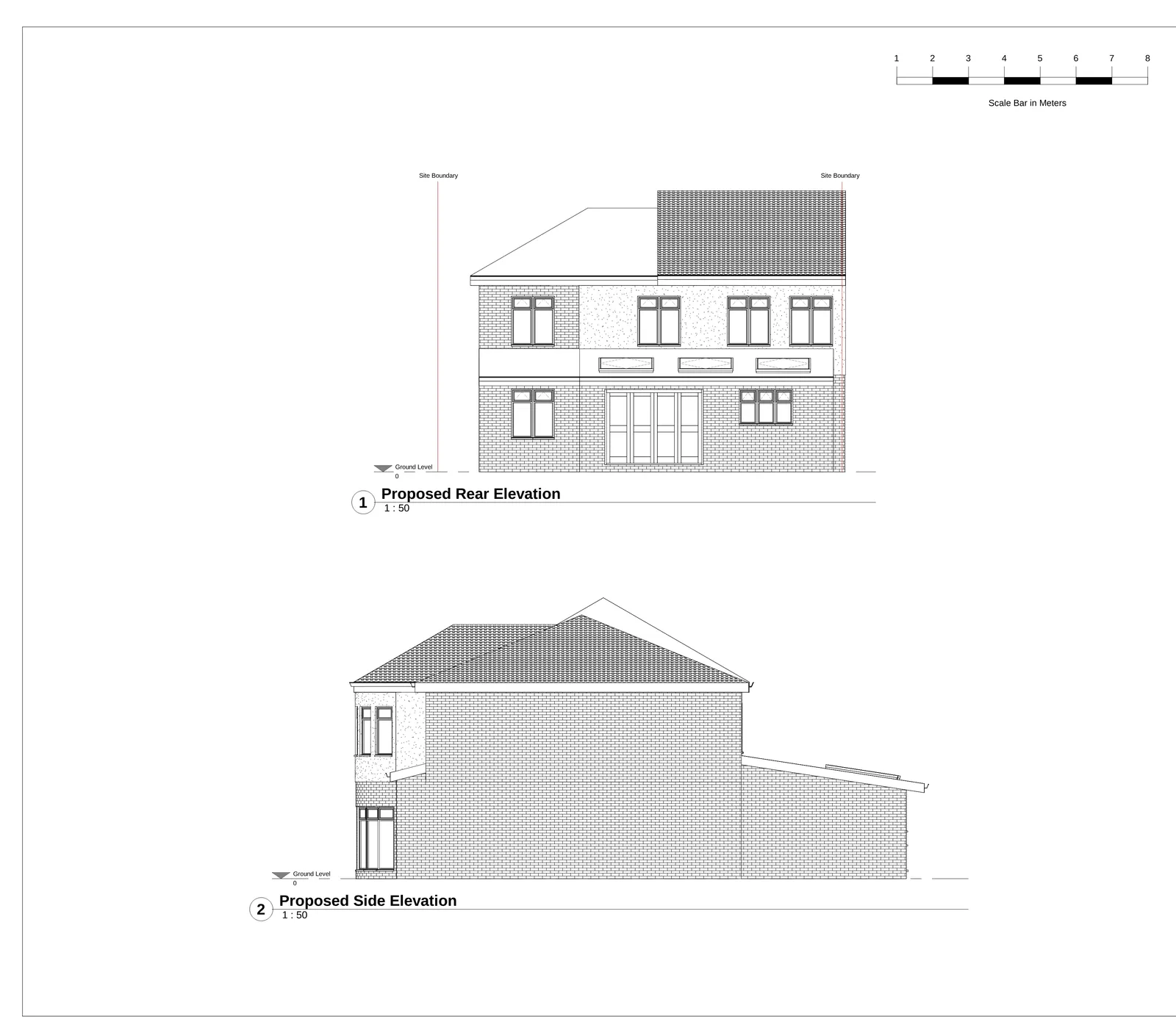
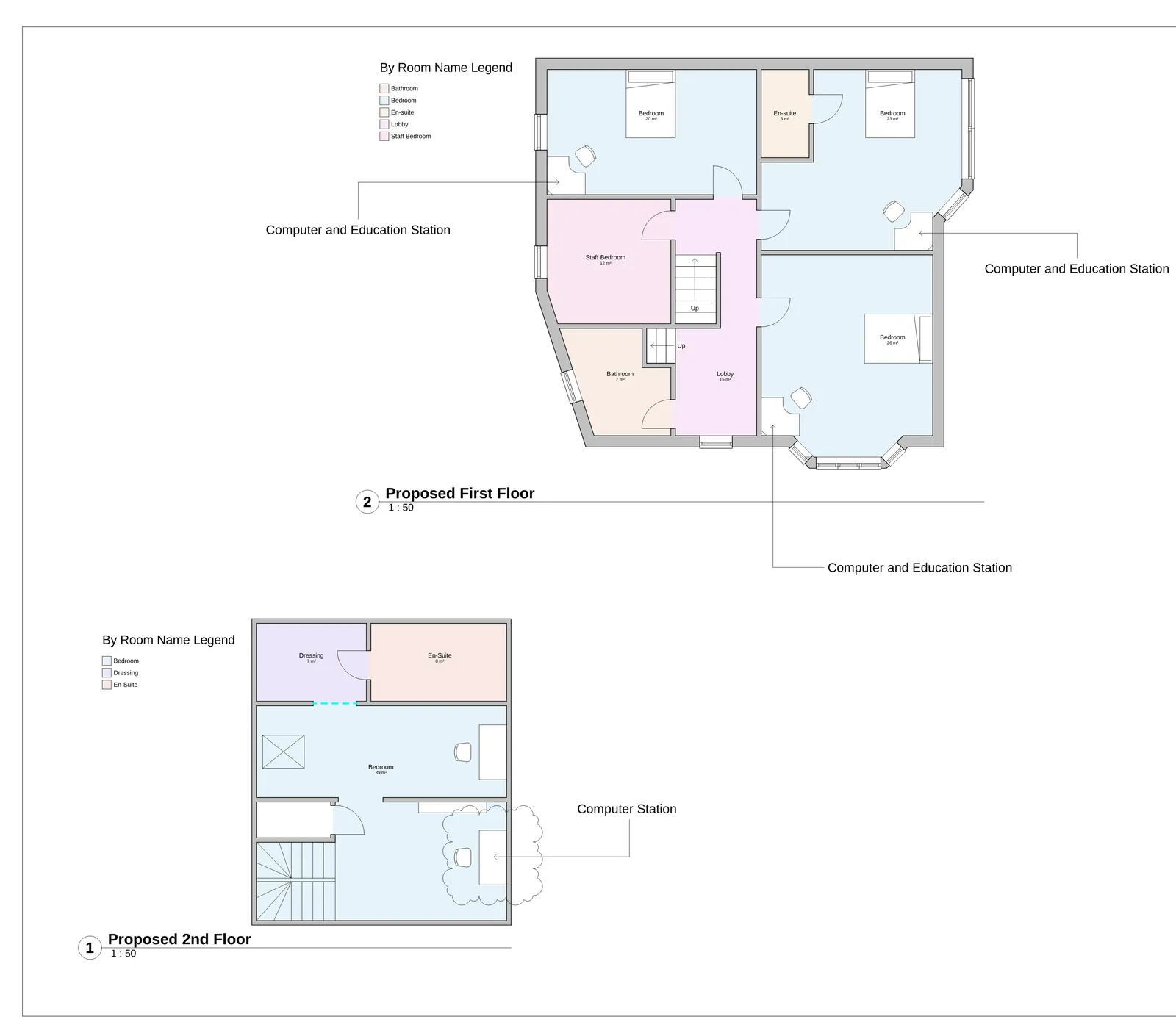
These example plan sheets show the type of architectural drawings, existing and proposed floor plans, elevations, roof plans, sections and 3D views Crown Architecture prepares for planning applications, permitted development, building control and residential design work. For homeowners, landlords and developers, Crown Architecture & Structural Engineering Ltd can prepare measured survey drawings, proposed layouts, planning drawings, building regulation drawings and supporting plan packages for extensions, loft conversions, garage conversions, internal alterations, HMO layouts and change-of-use applications.
Every project is reviewed around the property, the local authority requirements and the intended approval route, so the final drawing package is suitable for planning submission, building control coordination and contractor pricing where required.
Project details
Project summary
Project type
Two-storey rear extension
Location
Wandsworth, South-West London
Planning route
Householder planning application
Construction cost
£98,000–120,000
Services
planning drawings, planning consultant, building regulation drawings
Project imagery
Two-storey rear extension — project imagery
Residential planning drawings, building regulation packages, and completed project photography related to this case study.


Project background
Project Brief
The clients owned a mid-terrace Victorian house in Wandsworth, with a relatively shallow rear garden. The brief was to extend both ground and first floor to the rear — creating a large kitchen-dining space on the ground floor and an additional bedroom on the first floor — without significantly reducing the remaining garden area.
The existing rear addition (a Victorian back addition) formed part of the extension envelope. The design incorporated this existing structure while adding the new first-floor addition on top of the ground-floor extension.
Have a similar project in Wandsworth or another London borough? Get a free initial consultation.
Get a Free QuoteDesign and planning
Design and Planning
Two-storey rear extensions are not within permitted development for residential properties, so a householder planning application was required. The key planning issues for Wandsworth were: the depth of the extension relative to the rear boundary, the impact on the amenity of the immediate neighbours (rear and side), and the design and materials.
The extension was designed with a pitched roof matching the host building's pitch and materials — essential in a street where all the comparable properties have matching back additions. The first-floor extension was set back 300mm from the party walls and had no windows on the rear elevation that would cause overlooking.
The planning application was submitted to Wandsworth and registered within seven days. The case officer raised one query about a rear-facing first-floor window and its potential impact on the neighbour's garden amenity. We amended the window to a high-level obscure-glazed light rather than a full-height window. The amendment was accepted and planning permission was granted within the eight-week period.
Construction and outcome
Party Wall and Building Regulations
The two-storey extension involved structural works to both party walls — the new first-floor extension needed to bear on the party walls, and new lintels were installed in the ground floor on both sides. Party wall notices were served on both neighbours at the outset of the project. One neighbour appointed their own party wall surveyor; the other served notice that they consented. A Party Wall Award was agreed with the first neighbour within six weeks.
The building regulation package covered: the new structural frame, Part L energy efficiency, fire separation from the existing house, drainage alterations, ventilation for the new rooms, and the connection between the new and existing structures. Building control approval was obtained in five weeks from submission.
Common questions
Two-storey rear extension — frequently asked questions
Practical answers to the planning, design, and technical questions this type of project most commonly raises.
Do I need a party wall agreement for a two-storey rear extension?
If a two-storey rear extension involves building on or near the boundary (within 3m for foundations and up to 6m in some cases), excavating within 3m of a neighbour's structure, or carrying out works to a shared wall, the Party Wall etc. Act 1996 applies and notice must be served on the affected neighbours. For most two-storey rear extensions in London, party wall notices are required for both the foundation excavation and the new structure bearing on or near the party wall.
How long does a party wall award take?
Party wall notices require a minimum one-month notice period before works can start. If a neighbour dissents or fails to respond within 14 days, surveyors are appointed and a Party Wall Award is prepared. An uncomplicated Award typically takes four to eight weeks to agree from the point of appointment. Complex structural situations or uncooperative neighbours can extend this period. Starting early is essential to avoid the party wall process delaying the programme.
What is the difference between a one-storey and two-storey extension for planning purposes?
Single-storey rear extensions within the depth limits may be permitted development (or proceeed under prior approval notification). Two-storey rear extensions are almost never within permitted development — they require a householder planning application regardless of depth. The planning assessment for a two-storey extension is more complex: the impact on the rear garden, the overlooking potential of first-floor windows, and the visual bulk of the two-storey mass all become material considerations.
Further reading
Related planning and design guides
More case studies
Other Crown Architecture projects
Rear dormer loft conversion — Hackney, East London
Hackney Victorian Terrace — Rear Dormer Loft Conversion
Single-storey rear extension — Kensington, West London
Kensington Victorian Terrace — Conservation Area Rear Extension
Hip-to-gable loft conversion with rear dormer — Richmond upon Thames, South-West London
Richmond upon Thames — Hip-to-Gable Loft Conversion
Mansard loft conversion — Islington, North London
Islington Georgian Townhouse — Mansard Loft Conversion
Start your project
Get a free quote for a similar project
Tell us about your project and we will respond within one working day with advice on the planning route and a fixed-fee proposal.
Call us on +44 7950 114633 or send us a message via our contact form. We cover all London boroughs and the home counties.
Contact UsReady to talk through your project?
Crown Architecture — Two-storey rear extension specialists
Expert planning drawings, building regulation packages, and planning consultancy for two-storey rear extension projects across London and the home counties. Fixed fees, fast response, high first-time approval rate.