

Cost guide
How Much Does Planning Permission Cost in London? (2026 Guide)
Planning permission in London involves several separate costs: the statutory planning fee paid to the local planning authority, the professional fees for drawings and application preparation, and any costs for supporting documents such as heritage statements, acoustic reports, or daylight assessments. This guide breaks down every cost component so you can budget accurately for your project.
Example planning & architectural drawings
Example plan sheets prepared by Crown Architecture
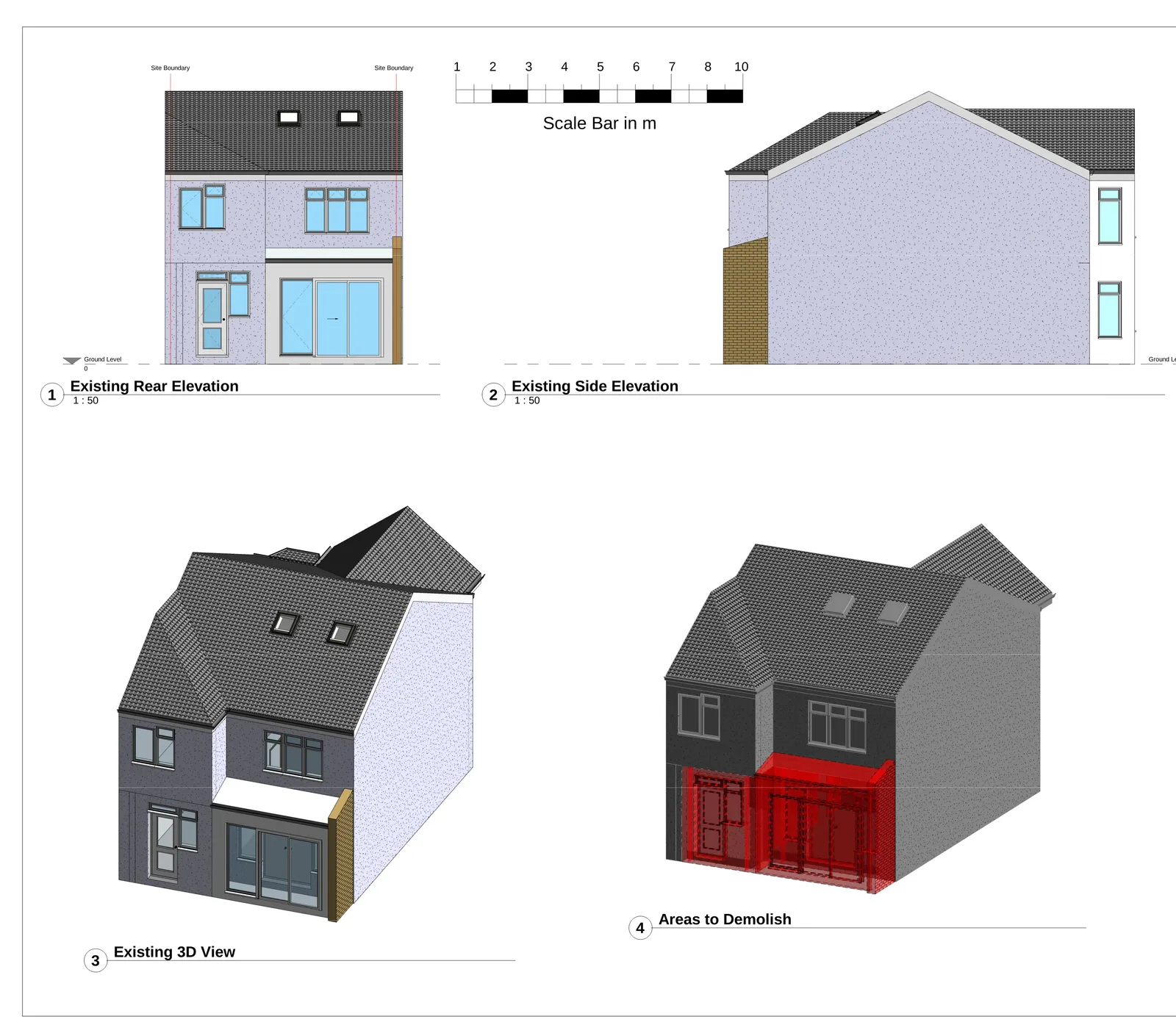
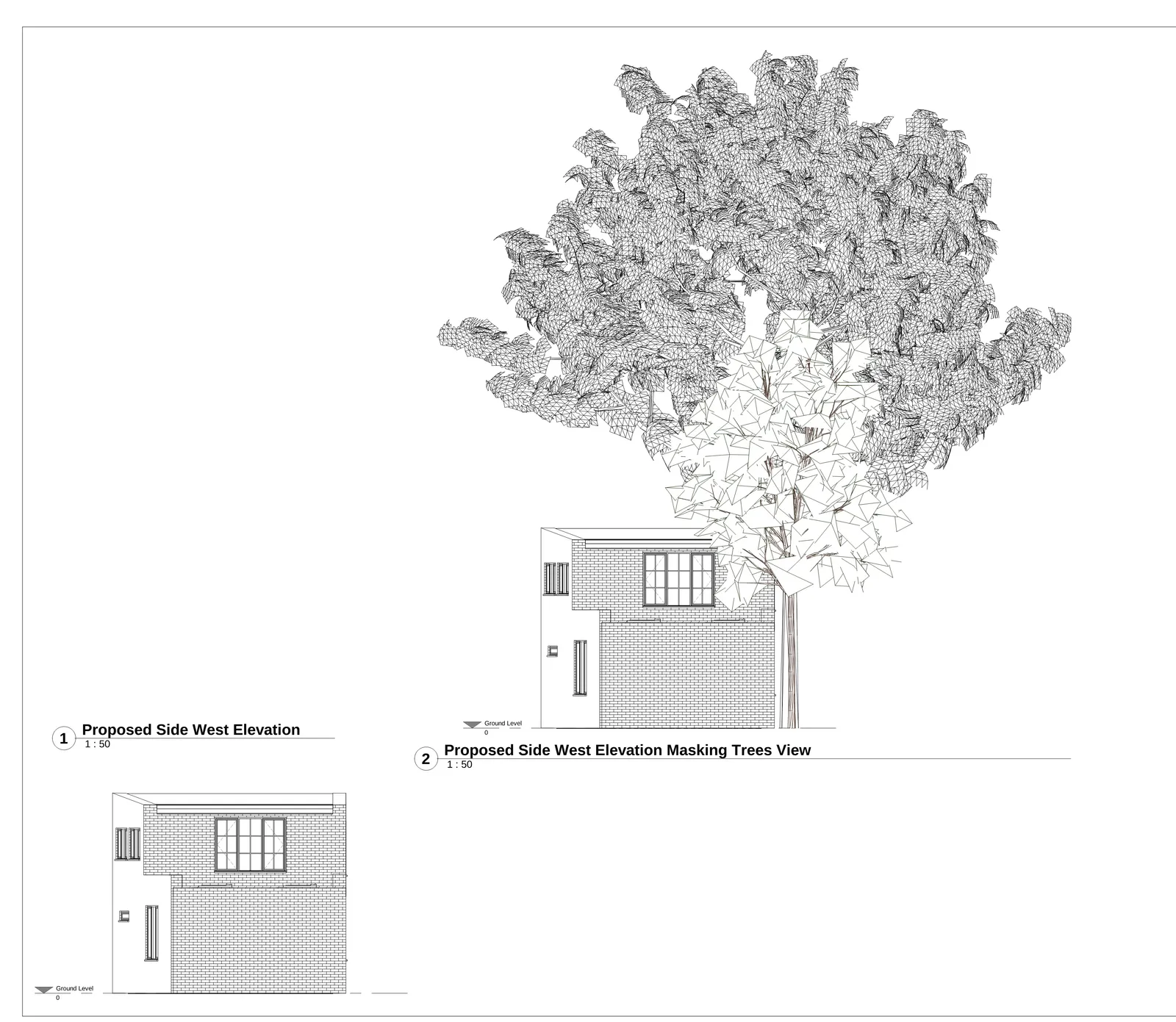
These example plan sheets show the type of architectural drawings, existing and proposed floor plans, elevations, roof plans, sections and 3D views Crown Architecture prepares for planning applications, permitted development, building control and residential design work. For homeowners, landlords and developers, Crown Architecture & Structural Engineering Ltd can prepare measured survey drawings, proposed layouts, planning drawings, building regulation drawings and supporting plan packages for extensions, loft conversions, garage conversions, internal alterations, HMO layouts and change-of-use applications.
Every project is reviewed around the property, the local authority requirements and the intended approval route, so the final drawing package is suitable for planning submission, building control coordination and contractor pricing where required.
Project imagery
Crown Architecture projects
Examples of the planning drawings, building regulation packages, and residential projects that this guide relates to.


Key information
The Statutory Planning Fee
The planning fee is a statutory charge set nationally by the government and paid to the local planning authority when you submit an application. For householder applications (extensions, loft conversions, outbuildings, and similar works to existing dwellings), the fee is currently £258.
This fee applies whether you are in Hackney or Hillingdon, Wandsworth or Westminster — the amount is set nationally and does not vary between London boroughs.
Some categories of application are fee-exempt. Alterations required for a disabled person's needs are exempt. Applications for listed building consent are free (though you may need accompanying planning permission which carries a fee). Pre-application advice is not covered by the application fee — it is a separate paid service offered by most London boroughs.
| Application Type | Statutory Fee (2026) |
|---|---|
| Householder application (extensions, loft conversions) | £258 |
| Prior approval (larger home extension) | £120 |
| Lawful Development Certificate (proposed works) | £129 |
| Lawful Development Certificate (existing works) | £258 |
| Change of use (dwelling to flat) | £578 |
| Listed building consent | Free |
| Discharge of planning conditions | £34 per request |
| Non-material amendment | £34 |
Need professional advice for your project? Crown Architecture offers free initial consultations.
Get a Free QuoteGuide section
Professional Fees for Planning Drawings
The planning fee is a small proportion of the total cost of obtaining planning permission. The larger cost is typically the professional fees for preparing the planning drawings — the measured survey, the design, and the full drawing package required for a valid application.
Professional fees for planning drawings in London vary with the scale and complexity of the project. A single-storey rear extension in a straightforward suburban street might cost £1,200 to £2,000 for the planning drawing package. A conservation area application, a larger project, or a proposal involving a listed building curtilage will cost more.
Crown Architecture prepares full planning drawing packages — survey, design, location plan, block plan, existing and proposed floor plans and elevations, and any required supporting documents — on a fixed-fee basis, agreed before any work begins. We issue a detailed fee proposal after the free initial consultation.
Guide section
Supporting Documents
Some planning applications in London require supporting documents in addition to the drawings. These carry additional professional fees.
A Design and Access Statement (DAS) is required for applications in conservation areas and for listed building consent. It explains the design rationale, the approach to materials, and how the proposal responds to the local character. Fees for a DAS typically range from £300 to £800 depending on the complexity of the heritage context.
A Heritage Statement or Heritage Impact Assessment may be required for applications affecting the setting of a listed building or conservation area in more sensitive contexts. These are more detailed than a standard DAS and are prepared by heritage consultants. Fees range from £500 to £3,000 depending on the sensitivity of the heritage asset.
An Acoustic Report or Daylight and Sunlight Assessment may be required by the planning authority for certain types of application — particularly applications that could affect neighbouring amenity or change the relationship between buildings. These are specialist reports prepared by acoustic engineers or daylight consultants and typically cost £500 to £1,500.
Guide section
Pre-Application Advice
Pre-application advice is a paid service offered by most London planning authorities that allows you to get written feedback from a planning officer before a formal application is submitted. It is not a statutory requirement, but it is often worthwhile for larger, more complex, or conservation-sensitive applications.
Pre-application fees in London vary significantly by borough. Most householder pre-application enquiries cost £100 to £500 depending on the council and the level of service requested.
The value of pre-application advice is that it can identify issues before they become grounds for refusal, potentially saving the time and cost of a refused application and subsequent re-submission or appeal. We manage pre-application advice as part of our planning consultancy service for London clients.
Guide section
Typical Total Costs
Adding up the statutory fee, professional fees, and any supporting documents, the typical total cost of obtaining planning permission for a London householder project is:
| Project Type | Typical Total Cost Range |
|---|---|
| Single-storey rear extension (straightforward) | £1,500 – £2,800 |
| Two-storey rear extension | £2,000 – £4,000 |
| Loft conversion (dormer) | £1,800 – £3,500 |
| Conservation area application (any type) | £2,500 – £5,500 |
| Listed building consent + planning | £3,500 – £8,000+ |
Guide section
Building Regulations — An Additional Cost
Planning permission fees are separate from building regulation fees. Building regulation drawings and approval carry an additional professional fee and a statutory charge. For a typical single-storey extension, building regulation approval costs an additional £900 to £2,500 in combined professional and statutory fees.
The statutory building regulation charge is set by each local authority or approved inspector and varies by the estimated cost of works. It is separate from the planning fee and paid to the building control body, not the planning authority.
Guide section
How to Reduce Costs
The most effective way to reduce the total cost of planning permission is to design a proposal that is likely to be approved first time. A well-prepared application that addresses officer concerns in advance avoids the cost of refusal, re-submission, or appeal.
Using permitted development where possible eliminates the planning fee and reduces the drawing package required — though a Lawful Development Certificate (£129 fee) is still advisable to confirm the position formally.
Combining planning permission with building regulation drawings in a single commission — from the same practice — reduces the total fees because the design does not have to be developed twice from separate starting points.
Common questions
How Much Does Planning Permission Cost in London? (2026 Guide) — frequently asked questions
Practical answers to the questions homeowners most often ask about this topic.
Is the planning fee refundable if my application is refused?
The planning fee is non-refundable once an application has been validated and registered by the planning authority, regardless of the outcome. If an application is refused, you can re-submit once within twelve months using the same fee for a revised application. You do not pay the fee again for the first re-submission following a refusal.
Do I pay the planning fee before or after the decision?
The planning fee is paid at the time of submission through the Planning Portal. It must be paid before the application is registered and the assessment clock starts. Applications submitted without the correct fee will not be registered.
Does the planning fee vary depending on the size of the extension?
For householder applications, the planning fee is a flat £258 regardless of the size of the extension. The fee changes only for different categories of application — for example, change of use, new dwellings, or commercial applications carry different fee structures.
Are pre-application fees offset against the planning application fee?
Some London boroughs offer a credit against the planning application fee if you have used their formal pre-application advice service, but this is not universal. Check with the specific planning authority whether any offset applies. Most boroughs keep pre-application and application fees separate.
Can I apply for planning permission without an architect?
Yes — there is no legal requirement to use an architect for a householder planning application. However, professionally prepared applications are more likely to meet the validation requirements, progress without delays, and secure a positive decision. For conservation area, listed building, or complex applications, using a professional is strongly advisable.
How long does a planning application take in London?
The statutory determination period for a householder planning application in London is eight weeks from validation. The overall time from starting the drawings to receiving a decision is typically twelve to twenty weeks, including drawing preparation (two to four weeks), submission and validation (one to two weeks), and determination (eight weeks).
Is planning permission required if I'm within permitted development?
No — permitted development allows certain types of householder works to proceed without a planning application. However, permitted development rights can be removed or restricted in conservation areas, Article 4 direction zones, and for some property types. Confirming the position with a Lawful Development Certificate is the safest approach before starting works.
What is the re-submission fee in London?
The first re-submission following a planning refusal in London is free of the planning fee, provided the re-submission is made within twelve months of the refusal and relates to the same proposal. Subsequent re-submissions or applications that are materially different from the refused scheme require a new fee.
Further reading
Related planning and design guides
More homeowner guides covering related planning, design, and technical topics.
Homeowner guide
Planning Drawings vs Building Regulation Drawings: What's the Difference?
Planning drawings and building regulation drawings are two different things — but both are needed fo…
Timeline guide
How Long Does Planning Permission Take? A Timeline for London Homeowners
From drawing preparation to decision, planning permission for a London extension or loft conversion …
Planning guide
Permitted Development vs Planning Permission: A Complete Guide for London Homeowners
Permitted development allows many extensions and loft conversions without planning permission — but …
Start your project
Get a free quote from Crown Architecture
Tell us about your project and we will respond within one working day with a fixed-fee proposal.
Call us on +44 7950 114633 or use our contact form to discuss your project and receive a fixed-fee proposal.
Contact UsReady to talk through your project?
Crown Architecture — Planning and design for London homes
Expert planning drawings, building regulation packages, and planning consultancy for extensions, loft conversions, and residential alterations across London and the home counties.