

Cost guide
House Extension Costs in London: A Complete 2026 Guide
The cost of a house extension in London varies enormously depending on the size, type, specification, and location of the project. A simple single-storey rear kitchen extension typically costs £35,000 to £75,000 including everything. A two-storey rear extension can cost £70,000 to £130,000 or more. This guide breaks down the full cost picture — construction, professional fees, planning, building regulations, and contingency — so you can budget accurately.
Example planning & architectural drawings
Example plan sheets prepared by Crown Architecture
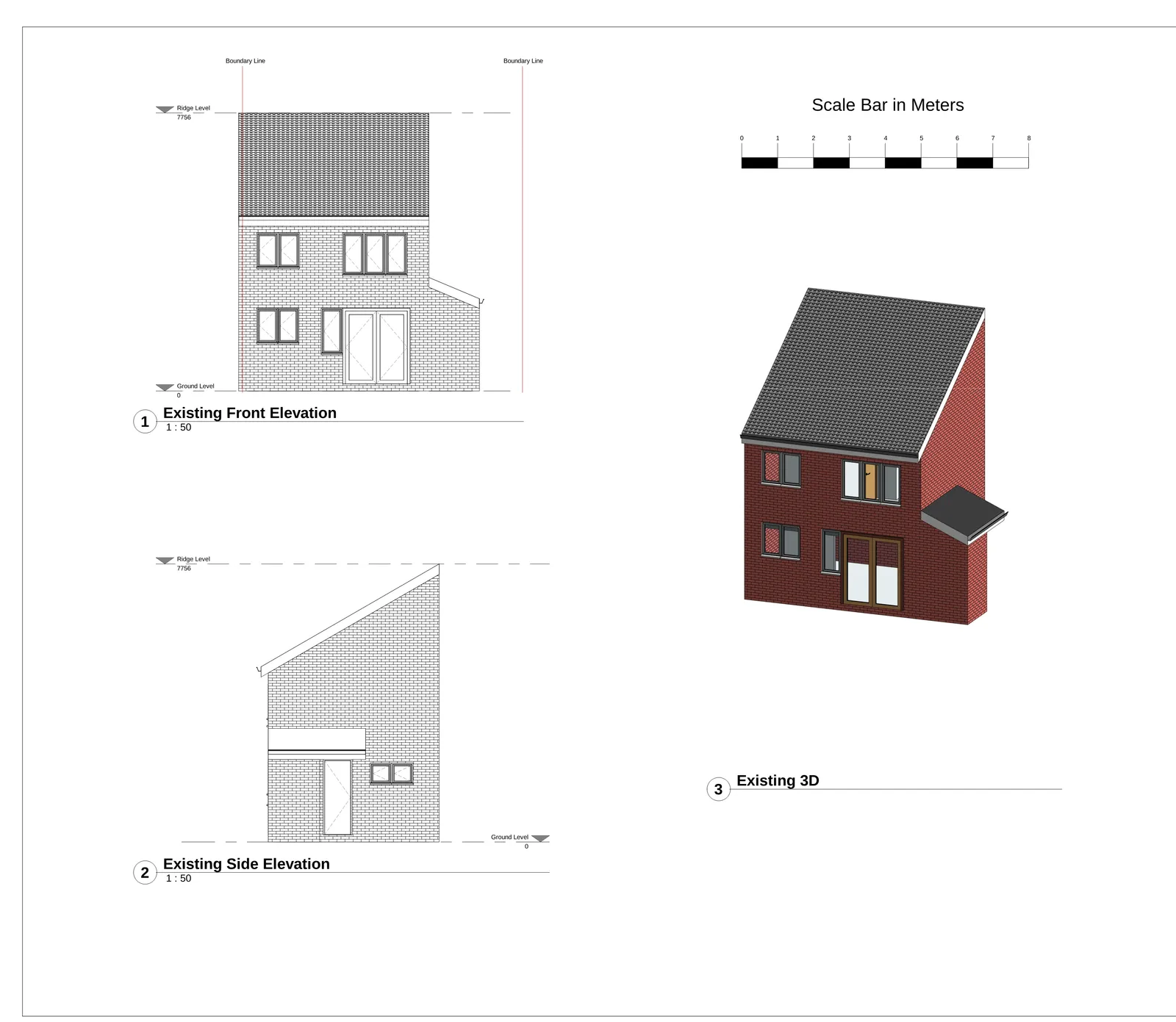
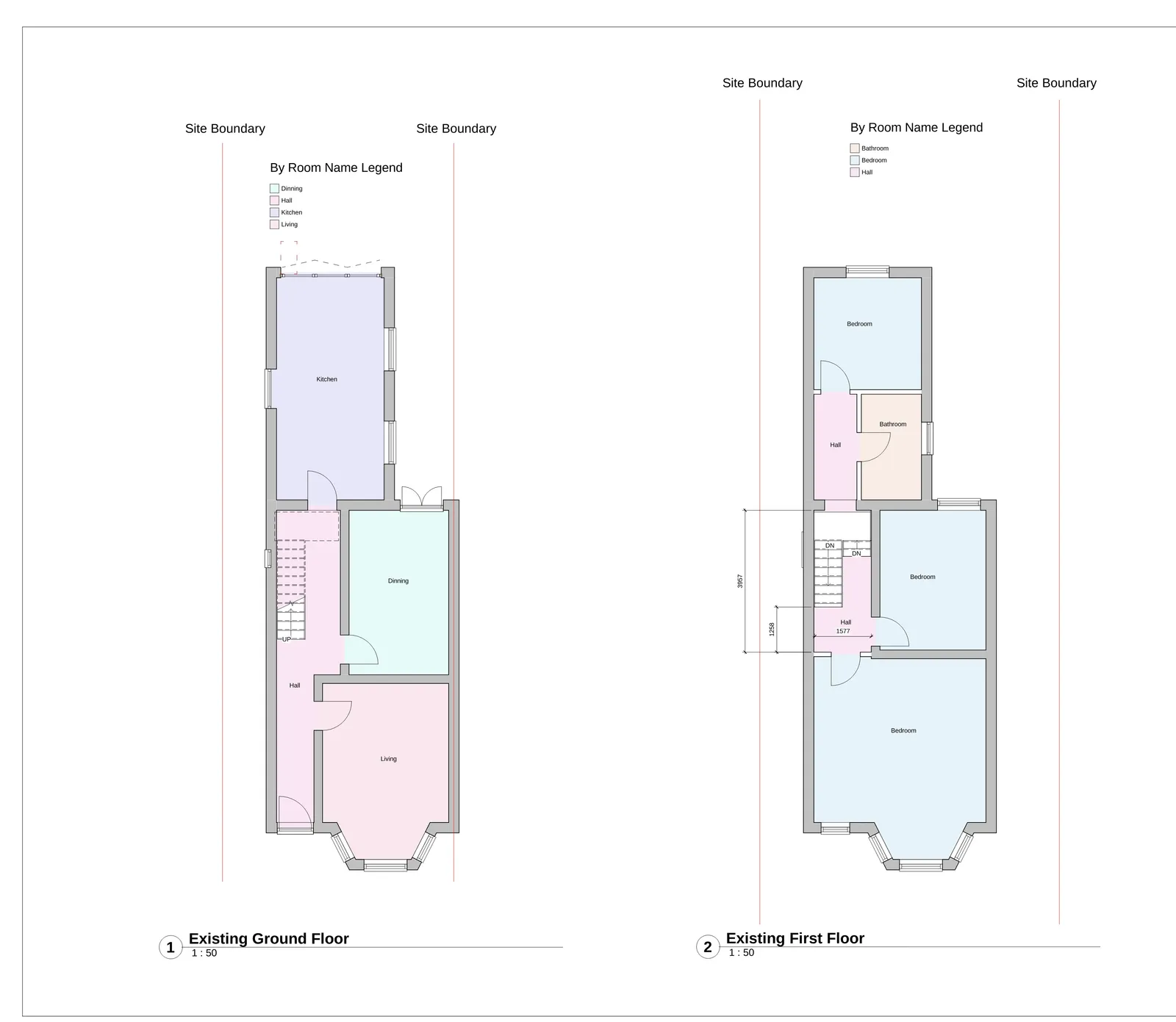
These example plan sheets show the type of architectural drawings, existing and proposed floor plans, elevations, roof plans, sections and 3D views Crown Architecture prepares for planning applications, permitted development, building control and residential design work. For homeowners, landlords and developers, Crown Architecture & Structural Engineering Ltd can prepare measured survey drawings, proposed layouts, planning drawings, building regulation drawings and supporting plan packages for extensions, loft conversions, garage conversions, internal alterations, HMO layouts and change-of-use applications.
Every project is reviewed around the property, the local authority requirements and the intended approval route, so the final drawing package is suitable for planning submission, building control coordination and contractor pricing where required.
Project imagery
Crown Architecture projects
Examples of the planning drawings, building regulation packages, and residential projects that this guide relates to.


Key information
Construction Cost Breakdown
Construction costs for extensions in London are higher than the national average, reflecting the higher cost of London labour and the complexity of working in dense urban environments. As a rule of thumb, extension construction costs in London range from £2,000 to £3,500 per square metre for a standard specification, and up to £4,500+ per square metre for a high-specification project.
| Extension Type | Size | Indicative Construction Cost (London, 2026) |
|---|---|---|
| Single-storey rear (standard spec) | 15–25m² | £35,000 – £65,000 |
| Single-storey rear (high spec, open plan) | 20–35m² | £55,000 – £90,000 |
| Two-storey rear extension | 25–45m² | £70,000 – £130,000 |
| Side-return extension | 10–20m² | £30,000 – £60,000 |
| Wraparound (rear + side) | 25–50m² | £75,000 – £150,000+ |
| Under-build / basement | 20–40m² | £100,000 – £250,000+ |
Need professional advice for your project? Crown Architecture offers free initial consultations.
Get a Free QuoteGuide section
Professional Fees
Professional fees are often underestimated in early budgeting. For a typical London extension, professional fees typically add 10–15% to the construction cost and cover architectural drawings, structural engineering, planning consultancy, and party wall surveying where required.
- Planning drawings: £1,200 – £3,000
- Building regulation drawings: £1,200 – £2,500
- Structural engineer: £800 – £2,500
- Planning consultancy (if needed): £1,000 – £3,000
- Party wall surveyor: £800 – £2,500 per adjoining owner
Guide section
Statutory Fees
In addition to professional fees, two sets of statutory charges apply to most London extensions:
Planning application fee: £258 (householder application, flat rate)
Building regulation fees: set by the council or approved inspector based on the estimated cost of works; typically £900 – £1,500 for a single-storey extension costing £50,000–80,000
Guide section
Contingency
A contingency allowance of 10–15% of the construction cost is advisable for any London extension project. Common cost overruns include: unforeseen ground conditions (buried rubble, high water table); encountering structural problems in the existing building during works; drainage alterations not identified before tender; and material cost changes between tender and construction start.
For projects involving underground works (basement, underpinning, deep drainage) or where the existing building is in poor condition, a higher contingency of 15–20% is prudent.
Guide section
VAT
Contractor VAT applies at 20% on construction costs in most circumstances. Some works carry a reduced 5% VAT rate — conversions from one use to another, works on empty properties that have been empty for more than two years, and some disability adaptation works. New dwellings are zero-rated for VAT. Standard extensions on an existing main residence are standard rated (20%).
Professional fees are also subject to VAT at 20% in most cases. The total project cost including VAT is typically 20% higher than the net figure.
Common questions
House Extension Costs in London: A Complete 2026 Guide — frequently asked questions
Practical answers to the questions homeowners most often ask about this topic.
Why are extension costs higher in London than the rest of the UK?
London extension costs are higher for several reasons: labour costs are higher (construction tradespeople in London command a premium); working conditions are more restrictive (narrow access, high-density streets, parking charges); material transport is more expensive; specialist contractors for conservation area and listed building work are more in demand; and the complexity of many London properties (Victorian terraces, basement drainage, party walls) adds cost.
Should I use an architect to project-manage my extension?
Some architects offer a full project management service, acting as contract administrator between you and the builder. This adds a fee (typically 5–8% of construction cost) but gives you professional oversight of the contractor's work, progress, and contract administration. The alternative is to manage the project yourself, appointing the contractor directly. For straightforward extensions, self-management is viable; for complex projects or listed buildings, professional contract administration is advisable.
Can I save money by using a design-and-build company?
Design-and-build companies offer a single contract covering both design and construction. This can simplify the procurement process, but it is important to understand what you are getting: a design-and-build contractor's primary interest is buildability and margin, not design quality or planning approval. Independent architectural drawings give you a design you control, which can be competitively tendered to multiple builders. For larger or conservation area projects, independent design is typically better value.
What is a schedule of works and do I need one?
A schedule of works (or specification) is a written document that describes in detail what the contractor is required to build — materials, workmanship standards, finishes, fittings, and exclusions. Combined with the drawings, it forms the basis of the building contract. A detailed schedule of works reduces the risk of ambiguity leading to extras (additional charges above the quoted price) during the works. We prepare specifications as part of our building regulation package.
How do I choose a contractor for my London extension?
For most London extensions, obtaining three competitive tenders from contractors with relevant experience is the standard approach. Tenders should be based on the same drawing and specification so they are genuinely comparable. Ask for references from recent London projects of similar scope, check Companies House for financial health, and confirm insurance (public liability and employer's liability). The cheapest tender is not always the best choice — look at programme, experience, and the terms of the proposed contract.
Further reading
Related planning and design guides
More homeowner guides covering related planning, design, and technical topics.
Homeowner guide
Planning Drawings vs Building Regulation Drawings: What's the Difference?
Planning drawings and building regulation drawings are two different things — but both are needed fo…
Cost guide
How Much Does Planning Permission Cost in London? (2026 Guide)
Planning permission costs in London include the planning fee, professional drawings, and any support…
Comparison guide
Loft Conversion vs Extension: Which Adds More Value to a London Home?
Comparing loft conversion vs extension for your London home? This guide covers costs, planning requi…
Start your project
Get a free quote from Crown Architecture
Tell us about your project and we will respond within one working day with a fixed-fee proposal.
Call us on +44 7950 114633 or use our contact form to discuss your project and receive a fixed-fee proposal.
Contact UsReady to talk through your project?
Crown Architecture — Planning and design for London homes
Expert planning drawings, building regulation packages, and planning consultancy for extensions, loft conversions, and residential alterations across London and the home counties.