

Case study — Richmond upon Thames, South-West London
Richmond upon Thames — Hip-to-Gable Loft Conversion
This case study covers a hip-to-gable loft conversion for a semi-detached Edwardian house in Richmond upon Thames, secured with planning permission from the Royal Borough of Richmond upon Thames (one of London's most conservation-area-dense authorities). The conversion added a bedroom and a study to the property.
Example planning & architectural drawings
Example plan sheets prepared by Crown Architecture
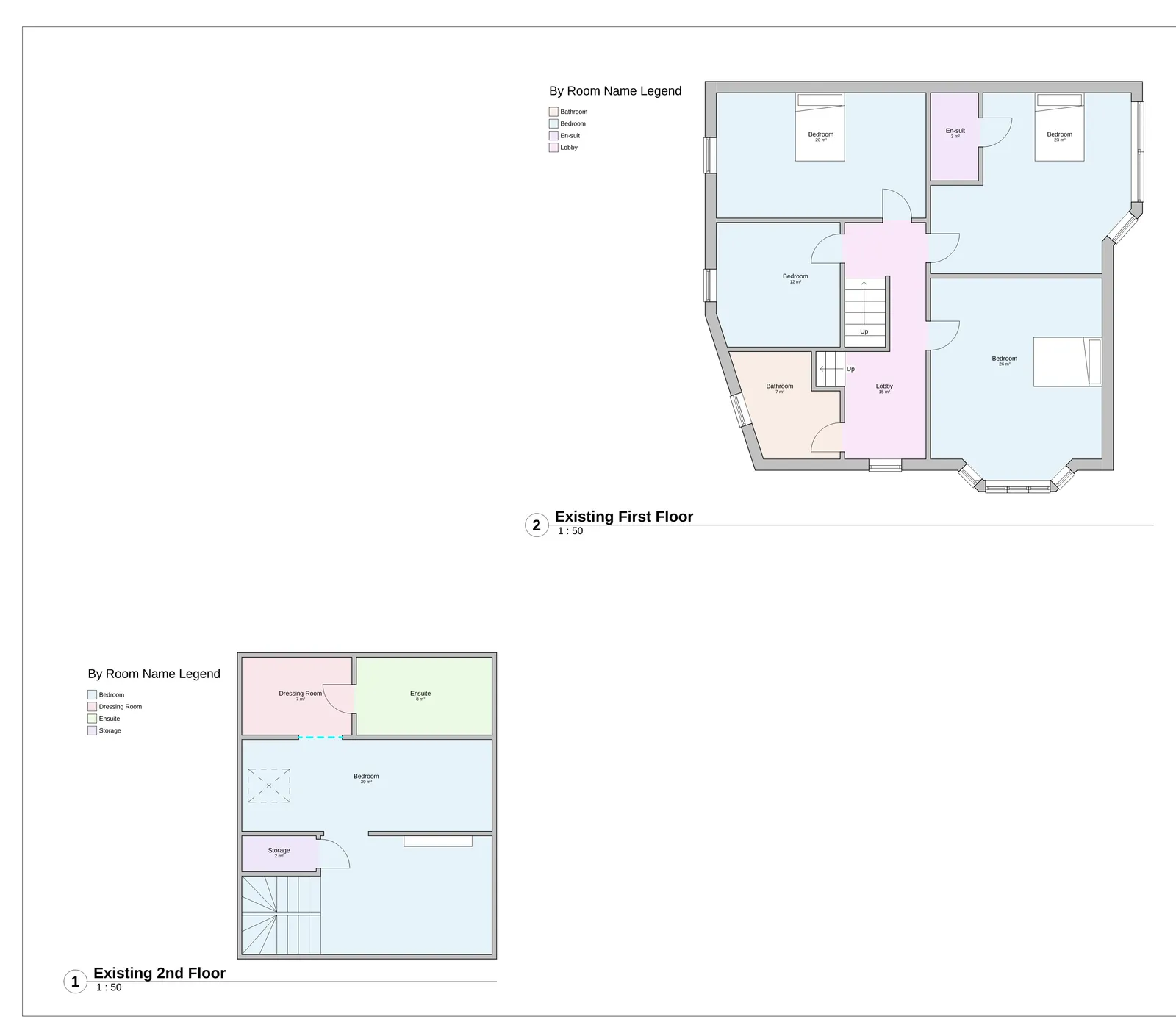
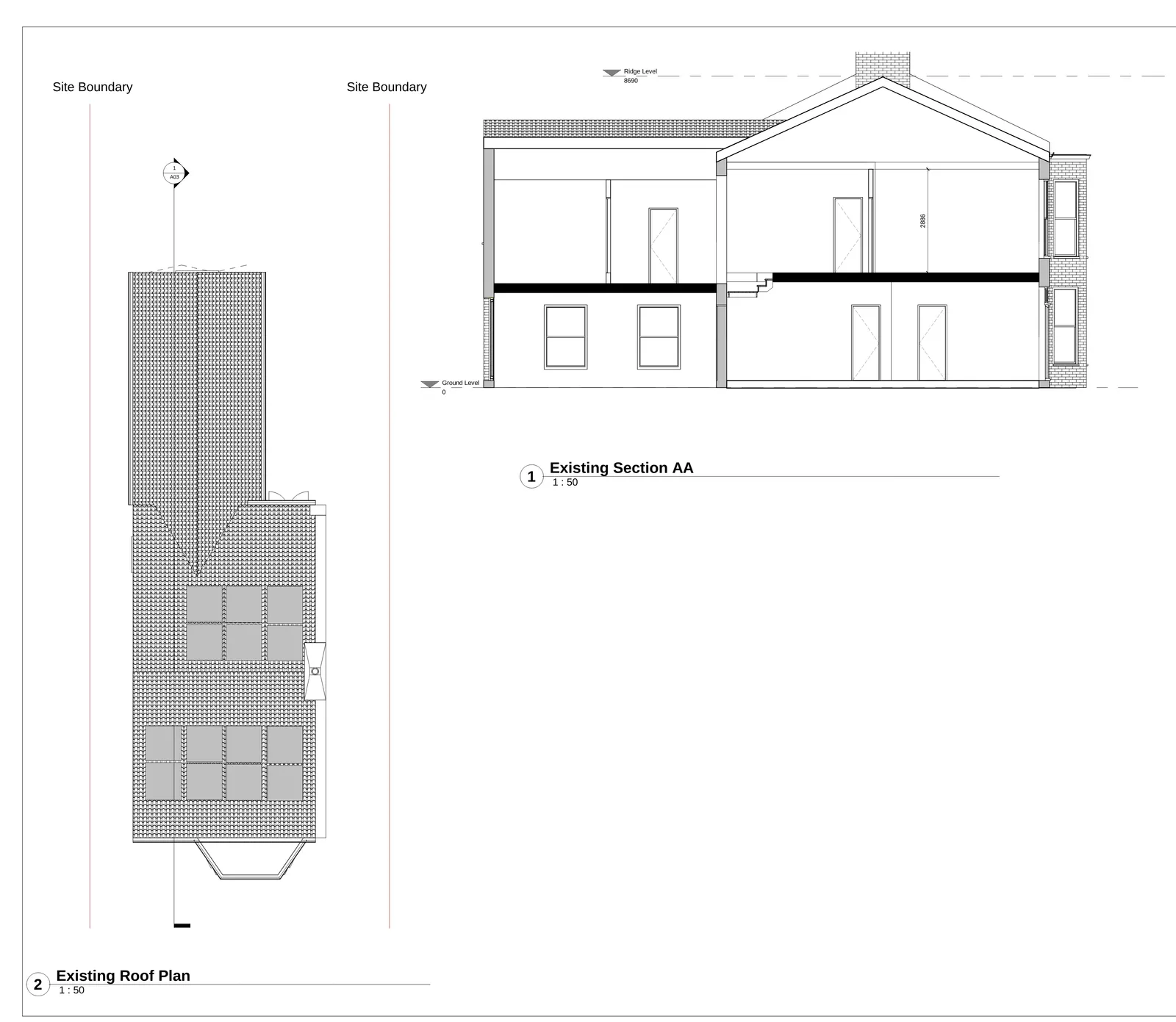
These example plan sheets show the type of architectural drawings, existing and proposed floor plans, elevations, roof plans, sections and 3D views Crown Architecture prepares for planning applications, permitted development, building control and residential design work. For homeowners, landlords and developers, Crown Architecture & Structural Engineering Ltd can prepare measured survey drawings, proposed layouts, planning drawings, building regulation drawings and supporting plan packages for extensions, loft conversions, garage conversions, internal alterations, HMO layouts and change-of-use applications.
Every project is reviewed around the property, the local authority requirements and the intended approval route, so the final drawing package is suitable for planning submission, building control coordination and contractor pricing where required.
Project details
Project summary
Project type
Hip-to-gable loft conversion with rear dormer
Location
Richmond upon Thames, South-West London
Planning route
Householder planning application (Richmond upon Thames)
Construction cost
£72,000–88,000
Services
planning drawings, planning consultant, building regulation drawings
Project imagery
Hip-to-gable loft conversion with rear dormer — project imagery
Residential planning drawings, building regulation packages, and completed project photography related to this case study.


Project background
Project Brief
The clients owned a semi-detached Edwardian house in Richmond upon Thames, built circa 1908. The existing hipped roof provided limited loft volume — insufficient for a useful conversion without altering the hip end. The brief was to create two usable rooms: a bedroom for an older child and a study/home office.
Richmond upon Thames has the highest number of conservation areas of any London borough, and the property was within a conservation area. The hip-to-gable conversion — which changes the roof form — required a householder planning application rather than a permitted development notification.
Have a similar project in Richmond upon Thames or another London borough? Get a free initial consultation.
Get a Free QuoteDesign and planning
Design Approach
The design converted the hip end of the roof to a vertical gable wall, allowing the roof space to be extended to the full party wall line. A rear dormer was added to provide additional headroom and floor area. The combined approach gave 42m² of new usable floor space — significantly more than a dormer-only conversion would have achieved on this property.
The new gable end was finished in matching stock brick to the existing side elevations. The dormer was positioned entirely on the rear slope and finished in slate to match the existing roof. The existing ridge height was not raised — the conversion was achieved by converting the hipped geometry, not by extending upward.
The design was prepared in response to Richmond upon Thames's design guide for loft conversions, which specifies that new gable ends should be in materials complementary to the existing building and that dormers should be set back from the eaves and below the ridge.
Construction and outcome
Planning Application
The householder planning application was submitted to Richmond upon Thames and registered promptly. The conservation area context required a Design and Access Statement and attention to the gable facing material and dormer specification.
One neighbour on the gable side submitted a holding objection requesting confirmation that the new gable would not overshadow their garden. We prepared a sun-path diagram showing that the new gable would not cause any additional shadow to the neighbouring property. The planning officer was satisfied by this information and determined the application within the eight-week period.
Planning permission was granted under delegated powers with a condition to submit and agree the gable brick sample before construction.
Construction and outcome
Building Regulations and Structural Work
The structural work for a hip-to-gable conversion is more complex than a simple rear dormer. The hip rafter and hip jack rafters were removed and replaced with a new gable end frame. The existing party wall was used as the structural support for the new gable and floor beams. A structural engineer designed the new gable frame, floor beams, and connections, which were incorporated into the building regulation package.
Building control approved the full-plans application in five weeks. Construction took sixteen weeks — longer than a simple dormer because of the gable build and the additional structural work.
Common questions
Hip-to-gable loft conversion with rear dormer — frequently asked questions
Practical answers to the planning, design, and technical questions this type of project most commonly raises.
Does a hip-to-gable conversion always need planning permission in London?
A hip-to-gable conversion changes the roof form of a building when viewed from the side — it replaces a sloping hip with a vertical gable. This is visible from the street in most semi-detached properties and is therefore outside permitted development under Class B of the GPDO, which requires that roof extensions do not project beyond the plane of the existing roof slope on the principal elevation. Planning permission is required for hip-to-gable conversions in virtually all cases in London.
How much space does a hip-to-gable conversion add compared to a dormer only?
A hip-to-gable conversion adds significantly more floor area than a dormer-only conversion because it converts the full sloping hip end to vertical, creating usable space across the full width of the property at that end. Combined with a rear dormer, a hip-to-gable conversion in a semi-detached house typically creates 35–50m² of new usable floor space, compared to 20–30m² for a rear dormer alone on the same property type.
Can a hip-to-gable conversion be done on a terrace?
Hip-to-gable conversions are only possible on properties with a hipped end — typically semi-detached houses or detached houses. End-of-terrace houses sometimes have a hipped roof on the exposed end, which can also be converted in the same way. Mid-terrace properties have two party walls and no hip ends, so a hip-to-gable conversion is not applicable — a dormer or mansard conversion is the usual approach.
Further reading
Related planning and design guides
More case studies
Other Crown Architecture projects
Rear dormer loft conversion — Hackney, East London
Hackney Victorian Terrace — Rear Dormer Loft Conversion
Single-storey rear extension — Kensington, West London
Kensington Victorian Terrace — Conservation Area Rear Extension
Two-storey rear extension — Wandsworth, South-West London
Wandsworth Victorian Terrace — Two-Storey Rear Extension
Mansard loft conversion — Islington, North London
Islington Georgian Townhouse — Mansard Loft Conversion
Start your project
Get a free quote for a similar project
Tell us about your project and we will respond within one working day with advice on the planning route and a fixed-fee proposal.
Call us on +44 7950 114633 or send us a message via our contact form. We cover all London boroughs and the home counties.
Contact UsReady to talk through your project?
Crown Architecture — Hip-to-gable loft conversion with rear dormer specialists
Expert planning drawings, building regulation packages, and planning consultancy for hip-to-gable loft conversion with rear dormer projects across London and the home counties. Fixed fees, fast response, high first-time approval rate.