

Case study — Hackney, East London
Hackney Victorian Terrace — Rear Dormer Loft Conversion
This case study describes a rear dormer loft conversion for a Victorian terraced house in Hackney, including the planning application to London Borough of Hackney, the building regulation package, and the structural coordination for the modified roof structure.
Example planning & architectural drawings
Example plan sheets prepared by Crown Architecture
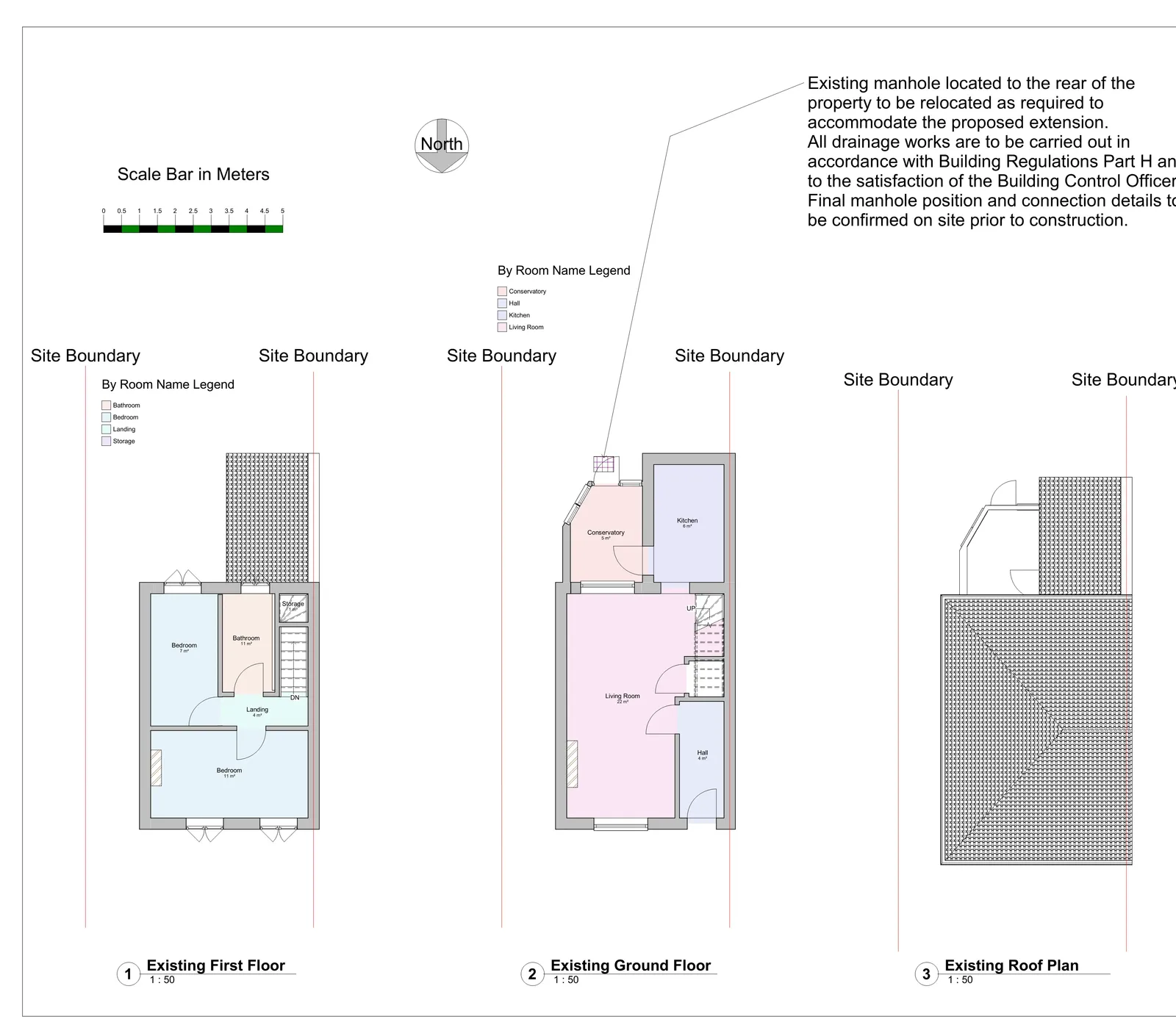
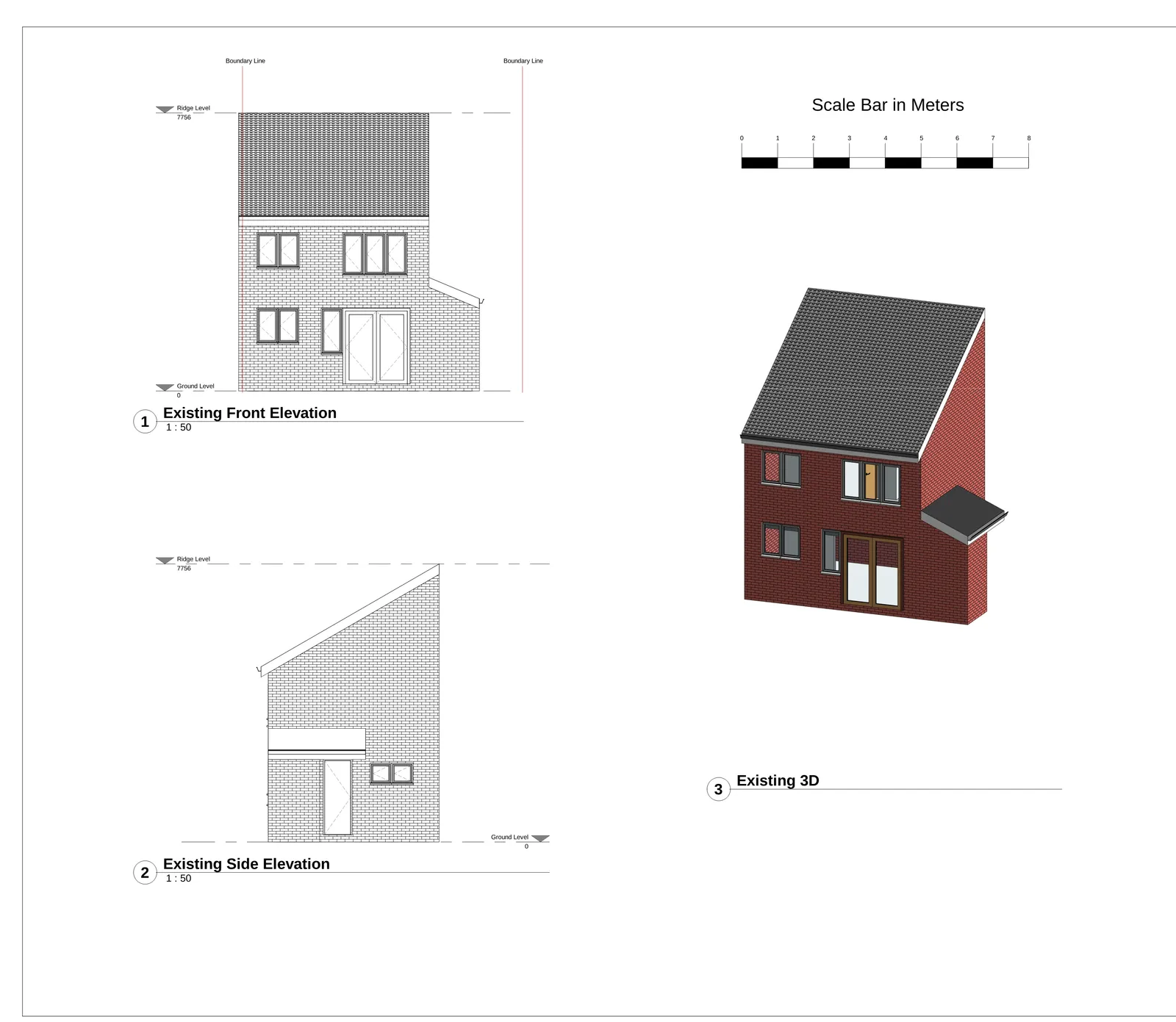
These example plan sheets show the type of architectural drawings, existing and proposed floor plans, elevations, roof plans, sections and 3D views Crown Architecture prepares for planning applications, permitted development, building control and residential design work. For homeowners, landlords and developers, Crown Architecture & Structural Engineering Ltd can prepare measured survey drawings, proposed layouts, planning drawings, building regulation drawings and supporting plan packages for extensions, loft conversions, garage conversions, internal alterations, HMO layouts and change-of-use applications.
Every project is reviewed around the property, the local authority requirements and the intended approval route, so the final drawing package is suitable for planning submission, building control coordination and contractor pricing where required.
Project details
Project summary
Project type
Rear dormer loft conversion
Location
Hackney, East London
Planning route
Householder planning application (conservation area)
Construction cost
£52,000–58,000
Services
planning drawings, building regulation drawings, planning consultant
Project imagery
Rear dormer loft conversion — project imagery
Residential planning drawings, building regulation packages, and completed project photography related to this case study.


Project background
Project Brief
The clients owned a mid-terrace Victorian house in Hackney, built circa 1885. The house had two bedrooms on the first floor and an unused loft space with a ridge height of 2.7m at the apex. The brief was to create a master bedroom suite in the loft, including a shower room, within a budget that prioritised quality of finish over maximum floor area.
The house was located within a conservation area designated by London Borough of Hackney, which meant that the rear dormer required a householder planning application — it was not within the permitted development Class B volume limits for the specific conservation area designation.
Have a similar project in Hackney or another London borough? Get a free initial consultation.
Get a Free QuoteDesign and planning
Design Approach
Our design placed the dormer entirely on the rear slope, keeping it invisible from the street. The dormer width was set to maximise the usable floor area while maintaining a minimum 300mm setback from each party wall — avoiding party wall complications while keeping the plan efficient.
The dormer roof form was flat, with a lead-finished standing seam covering that read as appropriate in Hackney's conservation area context. The rear elevation was set in matching brick to the original house walls rather than render or cladding, which is a common refusal reason in Hackney conservation areas.
The shower room was positioned at the rear of the dormer where headroom is naturally restricted by the lower dormer eaves — maximising usable headroom in the main bedroom area. A Velux rooflight was added to the rear slope to provide secondary light to the shower room without requiring an additional dormer.
Construction and outcome
Planning Application
The householder planning application was submitted to London Borough of Hackney and was registered within ten days of submission. The conservation area location required a Design and Access Statement addressing the dormer's relationship to the existing terrace, materials selection, and the character of the conservation area.
The application attracted no neighbour objections. The planning officer assessed the proposal against Hackney's local development plan policies for conservation areas and the conservation area character appraisal, and granted approval under delegated powers within seven weeks of registration.
Planning conditions attached to the consent required: materials to be approved prior to commencement (a pre-commencement condition), no additional rooflights on the principal elevation, and drainage details for the dormer roof water runoff.
Construction and outcome
Building Regulation Package
The building regulation package covered: the structural modifications to the existing roof (doubling existing rafters and installing a new structural steel ridge beam); the new floor structure (steel I-beams supported on the party walls, with timber joists between); the fire safety provisions (upgrading the existing staircase enclosure to 30-minute fire resistance with FD30S self-closing fire doors on all rooms off the stair); the shower room drainage and ventilation; and the insulation specification to meet Part L requirements.
A structural engineer provided calculations for the new steel ridge beam, the floor beams, and the padstone details at party wall bearing positions. These were coordinated into the building regulation drawings and submitted as part of the full-plans application to London Borough of Hackney building control.
Building regulation approval was granted within four weeks of submission. Construction commenced two weeks after approval and was completed in twelve weeks.
Construction and outcome
Outcome
The completed loft conversion provided a 28m² master bedroom with a separate 4m² en-suite shower room, bringing the house from two to three bedrooms. The clients received a Completion Certificate from Hackney building control at the end of the project.
The project was completed within the original construction budget. The planning approval process took seven weeks from registration, and the building regulation approval took four weeks — within normal expectations for a London conservation area project.
The conservation area character was maintained throughout — the dormer is not visible from the street, the materials match the existing building, and the works did not affect the front elevation in any way.
Common questions
Rear dormer loft conversion — frequently asked questions
Practical answers to the planning, design, and technical questions this type of project most commonly raises.
Do all loft conversions in Hackney need planning permission?
Not necessarily. Many loft conversions in Hackney that involve rooflights only, or rear dormer additions within the Class B volume limit, are permitted development outside conservation areas. However, the conservation area boundaries in Hackney are extensive — a significant proportion of Hackney's residential stock falls within a designation — and conservation area properties require planning permission for dormer additions. Always confirm the position for your specific address before committing to a design approach.
What is a Design and Access Statement and was one needed for this project?
A Design and Access Statement (DAS) is a document submitted with planning applications in conservation areas and for listed building consent. It explains the design rationale, the approach to materials, and how the proposal responds to the local character. This loft conversion was in a conservation area in Hackney, so a DAS was required as part of the application. Crown Architecture prepared the DAS as part of the planning package, addressing the conservation area character appraisal for the relevant Hackney designation.
How long did the planning application take?
The planning application for this Hackney loft conversion was registered within ten days of submission and determined in seven weeks from registration — well within the eight-week statutory period. The application was straightforward, attracted no objections, and the design had been prepared to respond directly to the conservation area policies, which reduced the risk of officer queries or requests for additional information.
What structural changes were required for this loft conversion?
The structural modifications included: installing a new steel ridge beam to replace the original load-bearing ridge board and allow the room to span the full width without a central post; doubling the existing rafters at the dormer; installing new steel I-beam floor joists supported on the party walls; and adding padstones at the bearing positions on the party walls. All structural elements were designed by a structural engineer whose calculations were included in the building regulation package.
What fire safety provisions are required for a loft conversion in Hackney?
For a house converted from two storeys to three storeys (a common scenario for a Victorian terrace in Hackney), Part B of the Building Regulations requires that the existing staircase is enclosed within 30-minute fire-resistant construction — fire-rated walls and ceilings, with FD30S self-closing fire doors on all rooms opening onto the stair. An interlinked mains-powered smoke alarm system is also required. These provisions were incorporated into the building regulation drawings and installed by the contractor.
Further reading
Related planning and design guides
More case studies
Other Crown Architecture projects
Single-storey rear extension — Kensington, West London
Kensington Victorian Terrace — Conservation Area Rear Extension
Hip-to-gable loft conversion with rear dormer — Richmond upon Thames, South-West London
Richmond upon Thames — Hip-to-Gable Loft Conversion
Two-storey rear extension — Wandsworth, South-West London
Wandsworth Victorian Terrace — Two-Storey Rear Extension
Mansard loft conversion — Islington, North London
Islington Georgian Townhouse — Mansard Loft Conversion
Start your project
Get a free quote for a similar project
Tell us about your project and we will respond within one working day with advice on the planning route and a fixed-fee proposal.
Call us on +44 7950 114633 or send us a message via our contact form. We cover all London boroughs and the home counties.
Contact UsReady to talk through your project?
Crown Architecture — Rear dormer loft conversion specialists
Expert planning drawings, building regulation packages, and planning consultancy for rear dormer loft conversion projects across London and the home counties. Fixed fees, fast response, high first-time approval rate.