

Case study — Islington, North London
Islington Georgian Townhouse — Mansard Loft Conversion
This case study describes a mansard loft conversion for a Victorian terrace within a highly graded Islington conservation area. The mansard form — with steeply pitched sides and a flat top — was appropriate for the conservation area character and allowed maximum usable space while avoiding the more intrusive flat-roofed box dormer form.
Example planning & architectural drawings
Example plan sheets prepared by Crown Architecture
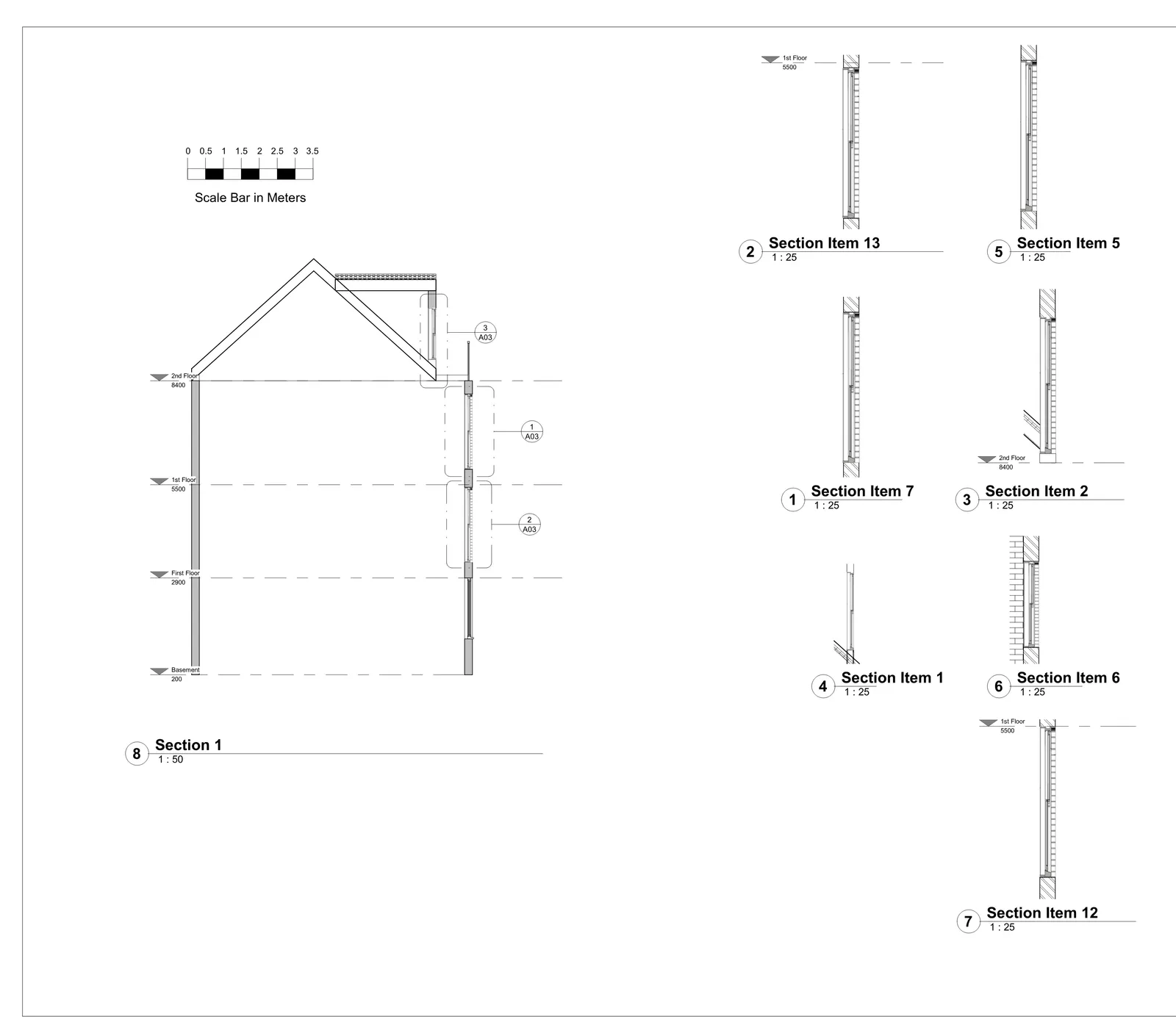
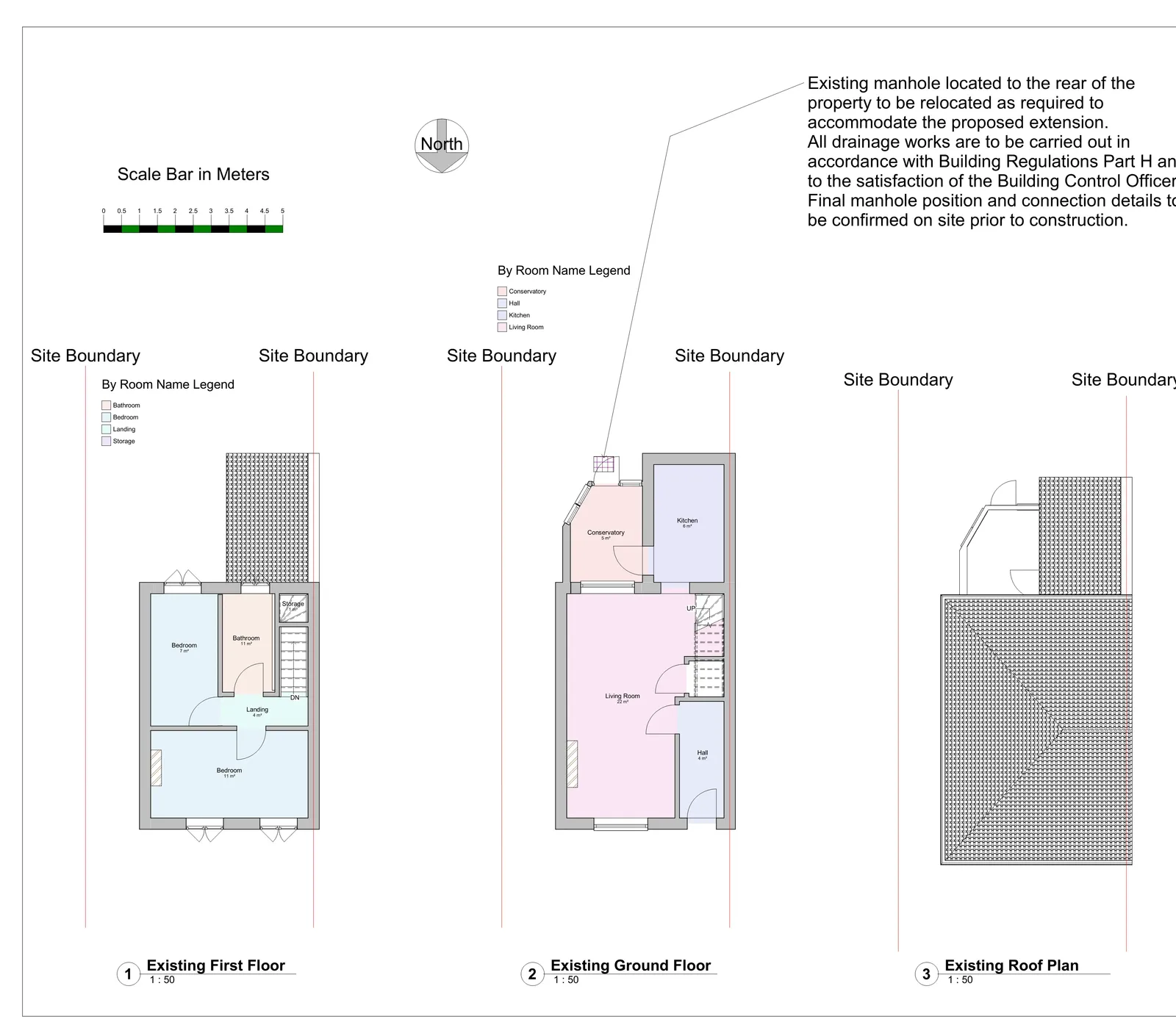
These example plan sheets show the type of architectural drawings, existing and proposed floor plans, elevations, roof plans, sections and 3D views Crown Architecture prepares for planning applications, permitted development, building control and residential design work. For homeowners, landlords and developers, Crown Architecture & Structural Engineering Ltd can prepare measured survey drawings, proposed layouts, planning drawings, building regulation drawings and supporting plan packages for extensions, loft conversions, garage conversions, internal alterations, HMO layouts and change-of-use applications.
Every project is reviewed around the property, the local authority requirements and the intended approval route, so the final drawing package is suitable for planning submission, building control coordination and contractor pricing where required.
Project details
Project summary
Project type
Mansard loft conversion
Location
Islington, North London
Planning route
Householder planning application (Islington conservation area)
Construction cost
£82,000–100,000
Services
planning drawings, planning consultant, building regulation drawings
Project imagery
Mansard loft conversion — project imagery
Residential planning drawings, building regulation packages, and completed project photography related to this case study.


Project background
Project Brief and Context
The property was a Victorian terraced house in a highly sensitive Islington conservation area — an area of predominantly Georgian and early-Victorian townhouses where planning policies on roof alterations are among the strictest in London. The clients wanted to add a master suite with en-suite bathroom to the loft, creating a quiet, private space at the top of the house.
In this conservation area, the Islington planning policies preferred a mansard conversion over a flat-roofed box dormer — the mansard's steeply pitched sides (set at approximately 70 degrees) read more sympathetically with the existing roof pitches and the established roofscape of the conservation area.
Have a similar project in Islington or another London borough? Get a free initial consultation.
Get a Free QuoteDesign and planning
Design Approach and Materials
The mansard conversion was designed with the standard London mansard form: near-vertical sides clad in natural slate, a flat roof finished in GRP, and zinc-framed dormer windows in the front and rear faces of the mansard slope. The front face was kept to a minimum — two small rooflights in the front slope — to reduce the visual impact from the street.
The rear face of the mansard was more generously glazed with two zinc-framed casement windows and a large rooflight in the flat section, bringing abundant light into the new bedroom and bathroom.
The slate cladding on the mansard sides was specified as natural Welsh slate — Islington's conservation area policies specifically require natural or approved reconstituted slate rather than concrete alternatives in this area.
Construction and outcome
Planning Application
The application to Islington Council was supported by a Design and Access Statement, which addressed the character of the conservation area, the appropriateness of the mansard form, and the specific material choices. The statement drew on Islington's conservation area character appraisal and the council's published guidance on roof alterations in conservation areas.
The application attracted two neighbour comments — both neutral in tone, requesting confirmation that the works would not affect the party walls. We provided a structural note confirming the load path for the new structure and confirming that no works to the party wall were required. The planning officer determined the application under delegated powers within eight weeks, with no additional requests for information.
Construction and outcome
Structural and Building Regulation Work
A mansard conversion requires significant structural alteration to the existing roof: the existing rafters are removed and replaced with the mansard frame, which bears on the existing party walls via new padstones. New floor beams are installed at the existing ceiling level. The structural complexity is greater than a simple dormer and requires detailed engineering design.
The building regulation package addressed the full Part B fire safety provisions (30-minute stair enclosure, FD30S fire doors, interlinked smoke alarms), the thermal specification for the mansard roof (target U-value 0.15 W/m²K), the zinc-frame window specification, and the drainage from the flat roof section.
Building control approved the full-plans application in four weeks. Construction took nineteen weeks — longer than a simple dormer because of the complexity of the mansard frame and the need for careful sequencing of the structural work.
Common questions
Mansard loft conversion — frequently asked questions
Practical answers to the planning, design, and technical questions this type of project most commonly raises.
What is a mansard loft conversion and how does it differ from a dormer?
A mansard conversion replaces most of the roof with a near-vertical rear (and sometimes front) slope and a flat top, creating maximum usable headroom across the full plan area. A dormer conversion adds a box-shaped addition to one or more slopes of the existing pitched roof. The mansard creates more space and is structurally more complex, but is often preferred in conservation areas because the steeply pitched sides read more sympathetically with the existing roofscape.
Are mansard conversions always acceptable in Islington conservation areas?
Not always — Islington's conservation area policies vary between areas, and the acceptability of a mansard form depends on the specific character appraisal for the area. In areas of predominantly Georgian and Victorian townhouses, a mansard is often the preferred form for loft conversions. In areas where the existing roof forms are more varied, other approaches may also be considered. Pre-application advice from Islington's conservation officer is always advisable for any loft conversion in a conservation area.
Why is natural slate specified rather than concrete tiles?
Islington's conservation area policies and character appraisals specify that roof coverings in conservation areas should use natural or approved reconstituted slate where the existing roofs are slated. Natural Welsh slate is preferred for cladding mansard cheeks. Concrete alternatives, though cheaper, do not have the same appearance or longevity and are typically not accepted on visually prominent elements in Islington's conservation areas.
Does a mansard conversion require a party wall agreement?
A mansard conversion typically involves works to or near the party walls — new padstones, new beam bearings, and possibly works to the party wall structure itself if the existing roof structure is connected to it. Party wall notices should be served on both neighbouring owners and, where they dissent, a Party Wall Award obtained before works commence. For a mid-terrace property like this one, both neighbours must be notified.
Further reading
Related planning and design guides
More case studies
Other Crown Architecture projects
Rear dormer loft conversion — Hackney, East London
Hackney Victorian Terrace — Rear Dormer Loft Conversion
Single-storey rear extension — Kensington, West London
Kensington Victorian Terrace — Conservation Area Rear Extension
Hip-to-gable loft conversion with rear dormer — Richmond upon Thames, South-West London
Richmond upon Thames — Hip-to-Gable Loft Conversion
Two-storey rear extension — Wandsworth, South-West London
Wandsworth Victorian Terrace — Two-Storey Rear Extension
Start your project
Get a free quote for a similar project
Tell us about your project and we will respond within one working day with advice on the planning route and a fixed-fee proposal.
Call us on +44 7950 114633 or send us a message via our contact form. We cover all London boroughs and the home counties.
Contact UsReady to talk through your project?
Crown Architecture — Mansard loft conversion specialists
Expert planning drawings, building regulation packages, and planning consultancy for mansard loft conversion projects across London and the home counties. Fixed fees, fast response, high first-time approval rate.