

Technical guide
Building Regulations for Extensions and Loft Conversions: A Complete Guide
Building regulations apply to almost all extensions and loft conversions, regardless of whether planning permission was needed. The Building Regulations set minimum standards for structural safety, fire safety, energy efficiency, drainage, ventilation, and accessibility. This guide explains what building regulation approval involves, how to apply, what the inspectors assess, and what you need at the end of the project.
Example planning & architectural drawings
Example plan sheets prepared by Crown Architecture
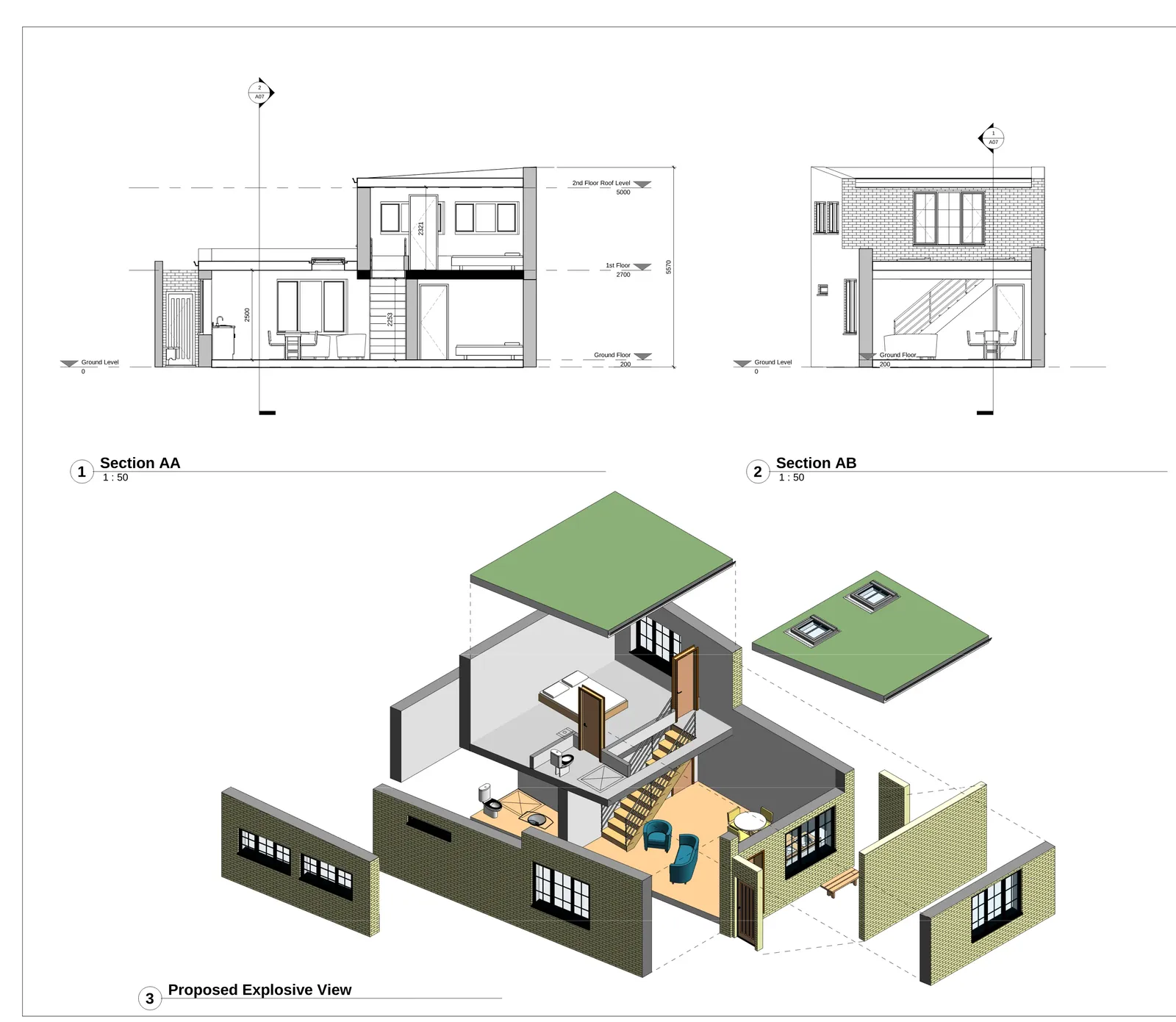
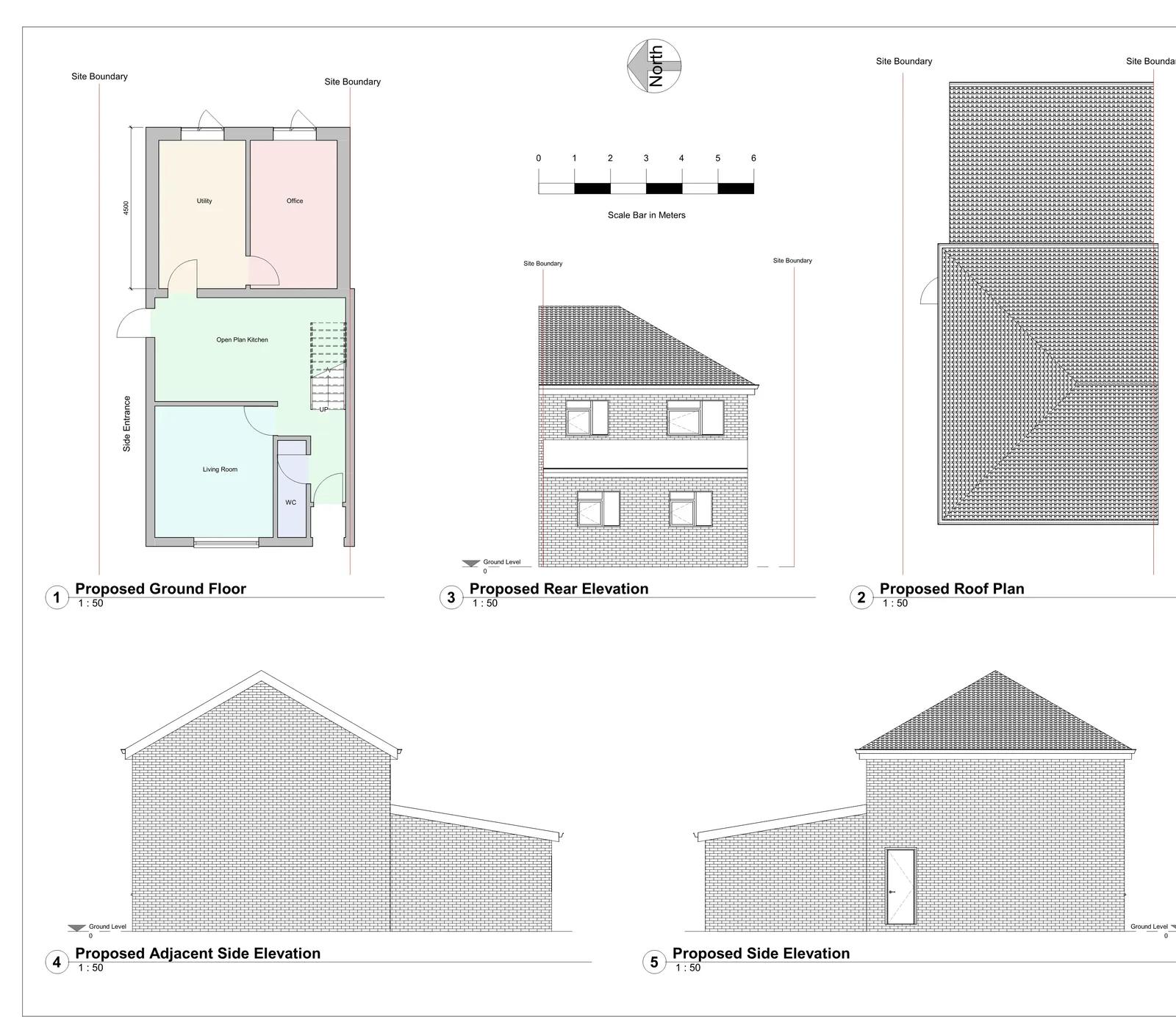
These example plan sheets show the type of architectural drawings, existing and proposed floor plans, elevations, roof plans, sections and 3D views Crown Architecture prepares for planning applications, permitted development, building control and residential design work. For homeowners, landlords and developers, Crown Architecture & Structural Engineering Ltd can prepare measured survey drawings, proposed layouts, planning drawings, building regulation drawings and supporting plan packages for extensions, loft conversions, garage conversions, internal alterations, HMO layouts and change-of-use applications.
Every project is reviewed around the property, the local authority requirements and the intended approval route, so the final drawing package is suitable for planning submission, building control coordination and contractor pricing where required.
Project imagery
Crown Architecture projects
Examples of the planning drawings, building regulation packages, and residential projects that this guide relates to.


Key information
What Building Regulations Cover
The Building Regulations are divided into Parts, each covering a different technical aspect of construction. For a typical extension or loft conversion, the following Parts are most relevant:
- Part A — Structure: The structural integrity of the new and modified building elements. Includes foundations, walls, floors, roofs, and any structural alterations.
- Part B — Fire safety: Means of escape in case of fire, fire separation, fire-resistance of structural elements, and smoke detection.
- Part C — Site preparation and resistance to contaminants and moisture: Damp-proofing, ground moisture, radon protection where relevant.
- Part F — Ventilation: Adequate ventilation for habitable rooms, kitchens, bathrooms, and utility spaces.
- Part H — Drainage and waste disposal: Drainage from the extension, connection to existing drainage, and compliance with sewer build-over requirements where applicable.
- Part J — Heat-producing appliances (where a boiler or fire is included).
- Part L — Conservation of fuel and power: Insulation and energy efficiency standards for new extensions and converted roof spaces.
- Part M — Accessibility: Access and use provisions for extensions and conversions.
- Part P — Electrical safety (for electrical installations in bathrooms or new habitable spaces).
Need professional advice for your project? Crown Architecture offers free initial consultations.
Get a Free QuoteGuide section
Full-Plans Application vs Building Notice
There are two main routes to building regulation approval: full-plans application and building notice.
A full-plans application submits a complete set of drawings and specification to the building control body before work starts. The inspector assesses the technical content, may ask for amendments, and issues a formal approval notice. This gives you and your contractor clear, approved documentation and is the recommended route for most extensions and loft conversions.
A building notice involves notifying the building control body that works are starting without submitting detailed drawings for prior approval. The inspector assesses compliance through site inspections during the works. A building notice is simpler but riskier: if non-compliant work is found on site, it must be exposed and corrected, which is expensive. Building notices are not recommended for complex works involving structural steel, party walls, or significant drainage alterations.
Guide section
Structural Requirements
Part A requires that the structural elements of an extension or loft conversion are adequate to support the loads they will experience. For a ground-floor extension, this covers: foundation type and depth, external wall construction, roof structure, and any new openings in the existing building.
For a loft conversion, structural requirements are more complex: the existing roof structure must be assessed (rafters may need to be doubled or replaced), new floor beams or joists must be sized for habitable floor loads (greater than attic floor loads), and new structural openings in the existing ceiling must be framed.
Where structural calculations are required (any steel beams, significant timber sizing, or non-standard situations), a structural engineer's calculations must be submitted alongside the building regulation drawings.
Guide section
Fire Safety for Loft Conversions
Part B fire safety requirements for loft conversions are among the most frequently misunderstood aspects of the regulations. The key requirement is that there is a protected route from the new loft rooms to the outside of the building in case of fire.
For a house being converted from two storeys to three storeys (i.e., adding a loft room), the usual requirement is that the existing staircase (from ground to first floor) is enclosed within 30-minute fire-resistant construction — fire-rated walls and ceilings with self-closing fire doors on all rooms opening onto the stair. An interlinked mains-powered smoke alarm system is also required.
An alternative to full stair enclosure, for some house types, is a rooflight escape window in the loft room (minimum opening size 450mm × 750mm at low level, accessible for escape) — but this is only acceptable for loft conversions where the only new room is the loft room itself and the building is no more than three storeys.
Guide section
Energy Efficiency (Part L)
Part L requires that extensions and loft conversions meet minimum U-values (thermal performance standards) for new fabric elements. The current (2021) Building Regulations Part L target U-values for extensions are:
| Element | Maximum U-Value |
|---|---|
| Roof | 0.15 W/m²K |
| Wall | 0.18 W/m²K |
| Floor | 0.18 W/m²K |
| Window (replacement) | 1.4 W/m²K |
| Door (replacement) | 1.4 W/m²K |
Common questions
Building Regulations for Extensions and Loft Conversions: A Complete Guide — frequently asked questions
Practical answers to the questions homeowners most often ask about this topic.
Do I need building regulations for a garage conversion?
Yes. Converting an integral garage into habitable space — a bedroom, study, or living room — requires building regulation approval. The walls, floor, and ceiling separating the garage from the house must be upgraded to habitable standard (insulation, damp-proof membrane, fire separation from the house), and the ventilation, heating, and lighting must comply with the relevant Parts of the Building Regulations.
What is a structural engineer's role in building regulation drawings?
A structural engineer calculates the sizes and specifications of structural elements — beams, columns, foundations, and connections — that cannot be determined from standard prescriptive guidance. For extensions with steel beams, loft conversions with modified roof structures, or any project involving removal of a load-bearing wall, structural calculations are required alongside the building regulation drawings. We coordinate structural engineers' calculations into our building regulation packages.
How many building control inspections will there be?
For a typical extension, building control inspections are carried out at: commencement (foundations before concreting), at damp-proof course level, at structural frame completion, when drains are exposed for inspection, and at final completion. For a loft conversion, additional inspections cover the new floor structure and the fire separation works. The exact number and timing depends on the complexity of the project and the building control body's procedures.
Can I use my own approved inspector?
Yes. Registered building control approvers (RBCAs — private-sector inspectors, formerly called approved inspectors) are an alternative to local authority building control for most types of work. RBCAs are regulated under the Building Safety Act 2022 and operate to the same technical standards. Some offer faster service, more flexible inspection arrangements, and greater flexibility on programme. We can recommend RBCAs from our professional network.
What is a regularisation certificate?
A regularisation certificate is issued when building regulation approval is sought retrospectively for works that were carried out without consent. The building control body inspects the completed works (which may need to be partially opened up for inspection) and issues a regularisation certificate if they are satisfied the works comply with the regulations in force at the time of construction. Regularisation is not guaranteed — if the works are non-compliant, they must be altered before a certificate is issued.
Further reading
Related planning and design guides
More homeowner guides covering related planning, design, and technical topics.
Homeowner guide
Planning Drawings vs Building Regulation Drawings: What's the Difference?
Planning drawings and building regulation drawings are two different things — but both are needed fo…
Comparison guide
Loft Conversion vs Extension: Which Adds More Value to a London Home?
Comparing loft conversion vs extension for your London home? This guide covers costs, planning requi…
Cost guide
House Extension Costs in London: A Complete 2026 Guide
House extension costs in London range from £30,000 for a small single-storey addition to £150,000+ f…
Start your project
Get a free quote from Crown Architecture
Tell us about your project and we will respond within one working day with a fixed-fee proposal.
Call us on +44 7950 114633 or use our contact form to discuss your project and receive a fixed-fee proposal.
Contact UsReady to talk through your project?
Crown Architecture — Planning and design for London homes
Expert planning drawings, building regulation packages, and planning consultancy for extensions, loft conversions, and residential alterations across London and the home counties.