

Planning guide
Article 4 Directions: What They Mean for Your London Property
An Article 4 direction is a mechanism by which a local planning authority removes specific permitted development rights from a defined area. Where an Article 4 direction applies, works that would otherwise be automatically permitted — changes to windows, cladding, roof extensions, boundary treatments — require a full planning application. London has hundreds of Article 4 directions affecting residential properties across the boroughs. This guide explains what they are, how to find out if you're affected, and what it means for your project.
Example planning & architectural drawings
Example plan sheets prepared by Crown Architecture
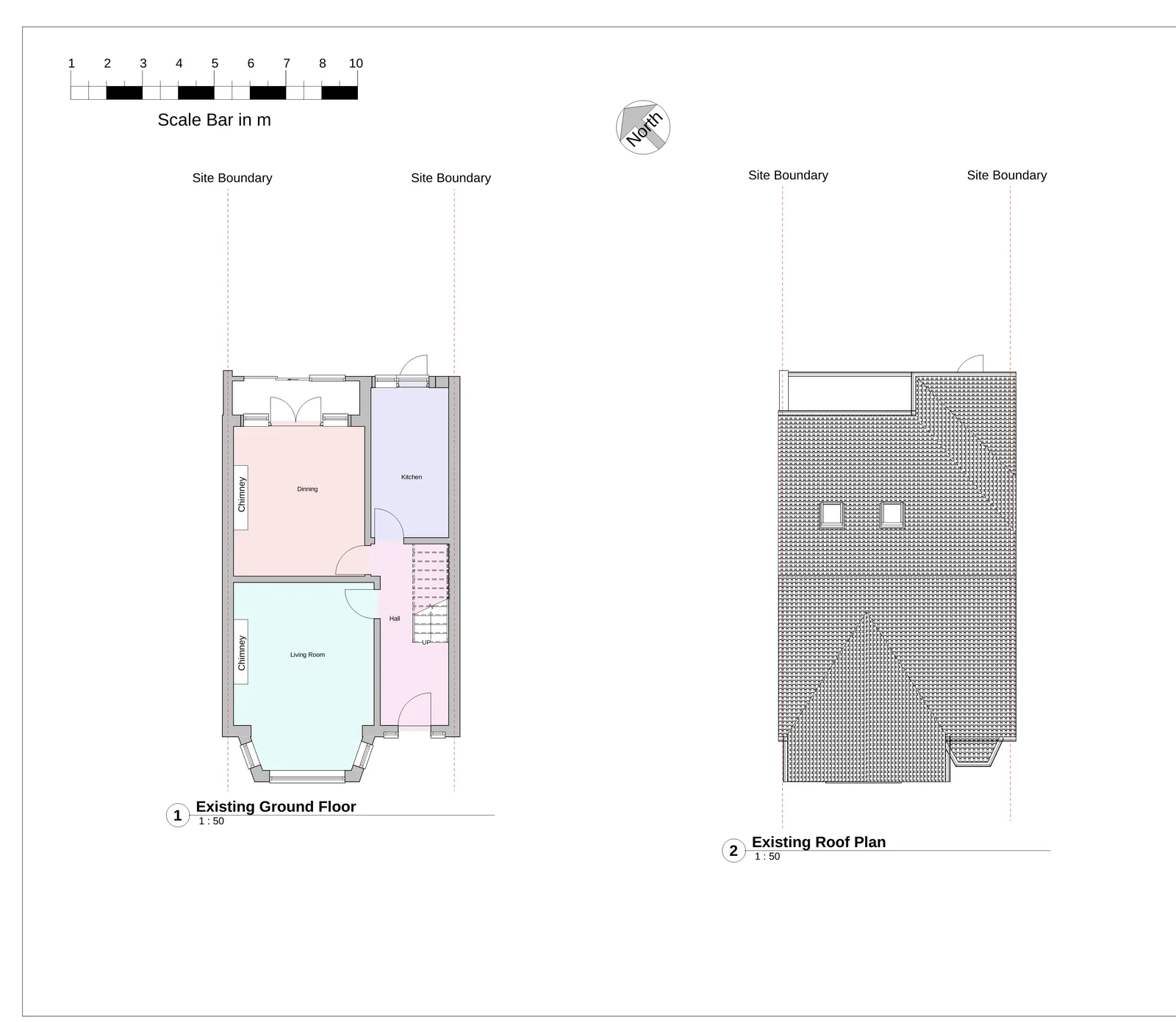
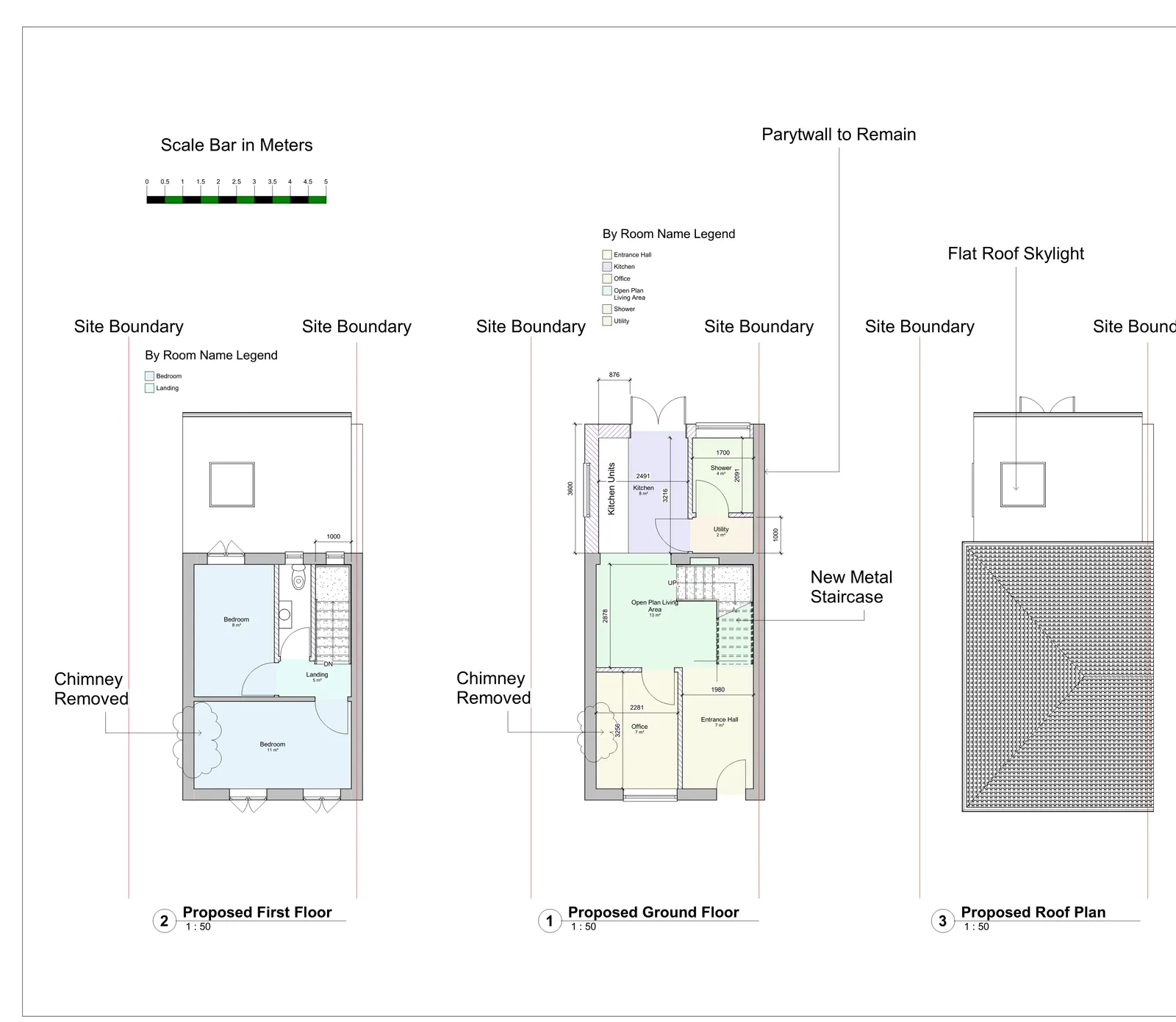
These example plan sheets show the type of architectural drawings, existing and proposed floor plans, elevations, roof plans, sections and 3D views Crown Architecture prepares for planning applications, permitted development, building control and residential design work. For homeowners, landlords and developers, Crown Architecture & Structural Engineering Ltd can prepare measured survey drawings, proposed layouts, planning drawings, building regulation drawings and supporting plan packages for extensions, loft conversions, garage conversions, internal alterations, HMO layouts and change-of-use applications.
Every project is reviewed around the property, the local authority requirements and the intended approval route, so the final drawing package is suitable for planning submission, building control coordination and contractor pricing where required.
Project imagery
Crown Architecture projects
Examples of the planning drawings, building regulation packages, and residential projects that this guide relates to.


Key information
What Is an Article 4 Direction?
An Article 4 direction is made by a local planning authority under Article 4 of the Town and Country Planning (General Permitted Development) (England) Order 2015. It removes the automatic permission granted by the GPDO for specified types of development in a specified area.
Article 4 directions are most commonly made in conservation areas to protect the character of the area from the cumulative effect of small changes that, individually, might seem minor but collectively harm the streetscape. The most common works targeted by London residential Article 4 directions are: window replacements (preventing the replacement of original sash windows with uPVC alternatives), external door replacements, wall cladding, satellite dish installation, and boundary wall or gate alterations.
Article 4 directions can be made for any class of permitted development, including commercial development. This guide focuses on the residential householder directions most commonly affecting London homeowners.
Need professional advice for your project? Crown Architecture offers free initial consultations.
Get a Free QuoteGuide section
How Article 4 Directions Work
When an Article 4 direction removes permitted development rights, works that would otherwise have been automatic now require a planning application. The planning authority assesses the application against its standard policies and, critically, against the objective of preserving the character and appearance of the area that the Article 4 direction was made to protect.
The planning authority cannot charge a fee for planning applications made as a result of an Article 4 direction — they are submitted for free. This distinguishes Article 4 planning applications from other types.
If planning permission is refused for works that would have been permitted development without the Article 4 direction, and the refusal causes financial loss, the property owner may be entitled to claim compensation from the planning authority. This compensation right exists specifically because Article 4 directions remove previously existing rights.
Guide section
Common Article 4 Directions in London
London boroughs with particularly extensive Article 4 direction coverage include Richmond upon Thames, Hammersmith and Fulham, Kensington and Chelsea, Islington, Camden, and Wandsworth — all boroughs with large numbers of conservation areas and significant Victorian and Georgian residential stock.
The most common Article 4 direction targets in London residential conservation areas are:
- External windows: prevents replacement of original or traditional windows with uPVC or non-traditional replacements
- External doors: prevents replacement of original or traditional front doors with non-traditional types
- External walls: prevents covering the exterior of the house with cladding of any type
- Roof covering: prevents replacement of original slate or clay tiles with concrete tiles or other non-traditional materials
- Satellite dishes: prevents installation of satellite dishes on chimney stacks, walls, or roofs visible from a public highway
- Boundary walls and gates: prevents removal or alteration of front boundary walls, railings, gates, and railings
Guide section
How to Find Out If You're Affected
Article 4 directions are recorded on the local planning authority's website and are also listed on the national planning portal. Most London boroughs publish an online map showing the boundaries of Article 4 direction areas, and many publish the specific schedule of permitted development rights removed by each direction.
If you are in doubt, contact your local planning authority directly — the planning department can confirm whether your property is affected by an Article 4 direction and what rights are removed. We carry out this check as part of our pre-project briefing for all London clients.
A Lawful Development Certificate application will also confirm the position — if the LDC is refused because of an Article 4 direction, this formally confirms the constraint. If it is granted, it confirms the works are permitted development despite any Article 4 direction.
Common questions
Article 4 Directions: What They Mean for Your London Property — frequently asked questions
Practical answers to the questions homeowners most often ask about this topic.
Does an Article 4 direction mean I can't change my windows?
An Article 4 direction that removes permitted development rights for window alterations means you need a planning application to change your windows — it does not mean permission will automatically be refused. Like-for-like replacement in matching timber sash or casement is generally approved. What is resisted is replacement with uPVC or significant changes to window proportions and divisions.
Is there a fee for planning applications made because of an Article 4 direction?
No. Planning applications that are required solely because of an Article 4 direction are submitted free of charge. The planning authority cannot charge its standard planning fee for applications required as a result of rights removal under an Article 4 direction. Note that other applications at the same property — even if submitted simultaneously — carry their normal fee.
Can I claim compensation if my planning application is refused because of an Article 4 direction?
If a planning application required because of an Article 4 direction is refused, and the refusal causes financial loss, you may have a right to claim compensation from the planning authority. This right exists specifically because Article 4 directions remove previously existing automatic permission. The compensation right is time-limited and the claim must be made within specified periods. Legal advice should be sought if this situation arises.
Can an Article 4 direction be challenged or removed?
Article 4 directions can be challenged through judicial review if there has been a procedural error in the making of the direction. Local planning authorities also have the power to revoke an Article 4 direction if it is no longer justified, though this is uncommon once directions are in place. A non-immediate Article 4 direction (made with 12 months' notice) is potentially subject to compensation claims, which discourages revocation.
Does an Article 4 direction affect my property value?
Article 4 directions typically affect properties in conservation areas, which are generally sought-after and command higher market values. The designation is more likely to preserve value (by preventing inappropriate development nearby) than harm it. The additional cost of a planning application for changes that would otherwise be permitted development is real but modest. If an application is refused, the financial impact depends on what was intended and what alternatives remain.
Further reading
Related planning and design guides
More homeowner guides covering related planning, design, and technical topics.
Cost guide
How Much Does Planning Permission Cost in London? (2026 Guide)
Planning permission costs in London include the planning fee, professional drawings, and any support…
Planning guide
Permitted Development vs Planning Permission: A Complete Guide for London Homeowners
Permitted development allows many extensions and loft conversions without planning permission — but …
Heritage planning guide
Planning in a Conservation Area: A Complete Guide for London Homeowners
Living in a conservation area changes what you can do to your home. This guide explains the planning…
Start your project
Get a free quote from Crown Architecture
Tell us about your project and we will respond within one working day with a fixed-fee proposal.
Call us on +44 7950 114633 or use our contact form to discuss your project and receive a fixed-fee proposal.
Contact UsReady to talk through your project?
Crown Architecture — Planning and design for London homes
Expert planning drawings, building regulation packages, and planning consultancy for extensions, loft conversions, and residential alterations across London and the home counties.